


Summary
Find 200+ hobbies and interests examples for your resume organized by skill type and industry. Learn what to include, skip, and formatting (January 2026).
Adding hobbies to your resume can feel like a gamble. Done poorly, they read as filler or distract from your experience, but when used correctly, hobbies and interests examples can help you stand out in a crowded applicant pool. In 2026, hiring managers and ATS systems still scan for hard skills, yet culture fit and transferable strengths increasingly influence interview decisions, especially for early-career candidates and career switchers. The key is using a company-neutral application tool you can read about here that adapts this section to each role, surfacing relevant activities while keeping formatting clean and recruiter-friendly.
TLDR:
Include hobbies if you're a recent grad or career switcher to show transferable skills.
Match hobbies to job requirements: team sports for collaboration, coding projects for tech roles.
List 3-5 specific activities near the bottom using simple comma-separated format for ATS parsing
Some modern platforms auto-adjust your hobbies section for each job, featuring relevant interests that match what that specific role values.
Hobbies work best when they reinforce skills already shown elsewhere on your resume, acting as proof instead of filler.
When to Include Hobbies and Interests on Your Resume
Add hobbies if you're a recent graduate, career switcher, or have employment gaps. They help fill space and show you stayed active while building transferable skills. Creative roles and startups often care about culture fit, so relevant hobbies can show alignment with company values.

Skip this section if you have 10+ years of experience. Use that space for achievements instead. Also avoid hobbies in conservative industries where only 43% of hiring managers review them, or if your interests might introduce bias around age, religion, or politics.
200+ Hobbies and Interests Examples Organized by Skill Type
Match your hobbies to the skills the role requires. If the job needs teamwork, list team sports. Looking to show creativity? Include design or writing activities. Below are 200+ examples grouped by skill.
Communication Skills
Public speaking, blogging, podcasting, debate club, teaching classes, vlogging, writing newsletters, storytelling, theater, improv comedy, book club moderator, language learning, translation work, tutoring, radio hosting
Leadership Skills
Team captain (any sport), club president, volunteer coordinator, event organizer, mentoring, coaching youth sports, student government, community organizer, fundraising coordinator, project leader, nonprofit board member
Teamwork and Collaboration
Team sports (soccer, basketball, volleyball, hockey), band or orchestra, choir, gaming guilds or esports teams, group fitness classes, hackathons, community theater, study groups, collaborative art projects, relay racing
Problem-Solving Skills
Puzzles (crossword, Sudoku, jigsaw), escape rooms, chess, strategy board games, coding challenges, robotics, home improvement projects, car restoration, debugging tech issues, mystery novels, geocaching, Rubik's cube speedsolving
Creativity
Painting, drawing, graphic design, photography, videography, creative writing, poetry, music composition, crafting, jewelry making, woodworking, pottery, knitting, calligraphy, fashion design, interior decorating, scrapbooking, film editing
Analytical Thinking
Data visualization, financial modeling, stock market investing, statistical analysis hobbies, scientific research projects, genealogy research, competitive programming, astronomy, birdwatching with data tracking, fantasy sports analytics
Technical Skills
Coding personal projects, app development, website building, 3D printing, electronics tinkering, Arduino or Raspberry Pi projects, video game modding, drone building, home automation, CAD design, machine learning experiments
Physical and Wellness
Running, cycling, swimming, yoga, martial arts, hiking, rock climbing, weightlifting, dance, Pilates, marathon training, triathlons, skiing, surfing, kayaking, tennis, golf, CrossFit
Hobbies and Interests by Industry and Job Function
Different industries value different hobbies based on their culture and skill needs. A tech startup might appreciate your hackathon participation, while a law firm looks for thorough pursuits.
Technology and Software
Open-source contributions, hackathons, personal coding projects, gaming, app development, tech blogging, attending meetups, building websites, automation projects, AI experimentation
Healthcare and Medical
Volunteering at clinics or hospitals, medical research hobbies, fitness activities, wellness coaching, first aid certification, mental health advocacy, running charity health drives
Finance and Banking
Stock market investing, financial planning hobbies, economic research, chess, golf, professional association memberships, CFA study, real estate investing
Creative Industries
Photography, design, writing, attending gallery openings, fashion blogging, film festivals, music production, brand collaborations, social media content creation
Education and Training
Tutoring, curriculum development projects, educational blogging, workshop facilitation, learning new languages, academic competitions, children's activity programs, educational YouTube channels
Hobbies for Recent Graduates and Entry-Level Candidates
Recent grads often have limited work history. Your hobbies can fill that gap by showing job-ready skills.
Focus on activities showing initiative. Student club leadership, volunteer coordination, or running a blog all count as real experience. If you organized campus events, you managed budgets and timelines. If you freelanced, you handled client communication and met deadlines.
Personal projects matter too. Building an app, starting a YouTube channel, or maintaining a portfolio website shows self-direction. Treat these like mini job experiences by describing your accomplishments and the skills you used.
Skip generic entries like "watching movies" or "traveling." Make them specific: "travel photography with 10K Instagram following" or "film analysis blog with 50+ published reviews."
How to List Hobbies and Interests on Your Resume (With Examples)
Place your hobbies section near the bottom of your resume, after work experience, education, and skills. Label it clearly as "Hobbies & Interests" or "Interests" so ATS systems can parse it correctly.
Keep it to 3-5 hobbies maximum. Choose activities that align with the role or show relevant skills.
You can format this section three ways. The standalone approach works best for most candidates:
Hobbies & Interests
Marathon running, Spanish language learning, open-source coding contributions, volunteer youth mentor
Recent grads with limited experience can integrate hobbies into their education section to show campus involvement. If space is tight, weave one standout hobby into your resume summary.
Skip bullet points and descriptions for hobbies. Simple comma-separated lists work better because 98.4% of Fortune 500 companies use an ATS, and inconsistent or overly complex formatting can interfere with parsing.
Hobbies and Interests to Avoid on Your Resume
Skip political, religious, or divisive topics. Campaign work, faith-based leadership, or activism around controversial issues can trigger unconscious bias, and you can't predict how a hiring manager will react.
Passive activities provide no insight into your skills. Watching TV or browsing social media (unless you're applying to media companies) suggest you lack initiative. Generic entries like "reading" without specifics tell recruiters nothing useful.
High-risk hobbies can raise liability concerns. BASE jumping or street racing may worry employers about absences or insurance costs.
Illegal or questionable activities never belong on your resume. This includes gambling or anything that reflects poor judgment professionally.
The Difference Between Hobbies and Interests
Hobbies require active participation and regular time investment. You practice guitar, train for marathons, or build apps. Interests are passive: you enjoy music, like fitness content, or follow tech news.
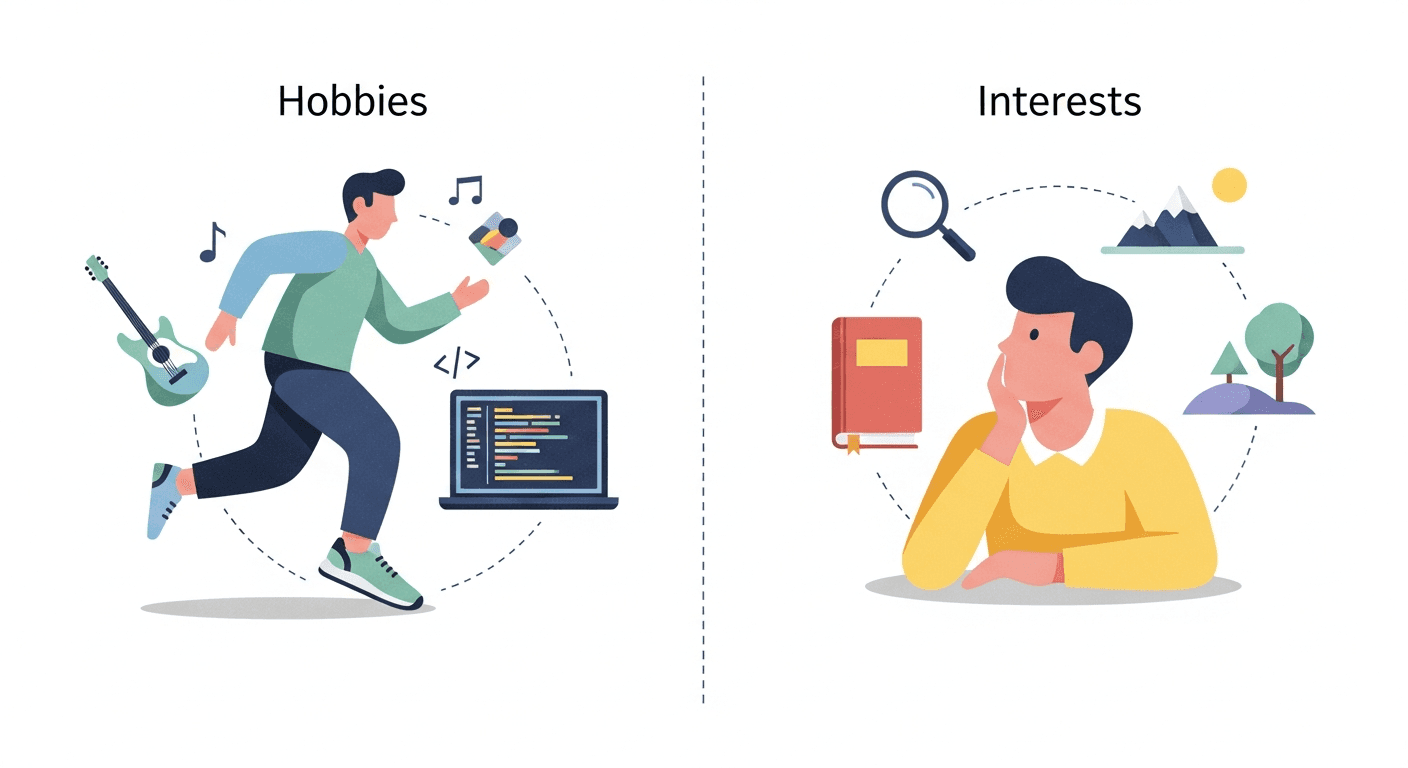
Recruiters value hobbies over interests because they show commitment and skill development. Convert interests into hobbies by adding action. Instead of "interested in finance," write "managing a stock portfolio." Instead of "enjoys writing," try "publishing monthly blog posts."
How Hobbies Impact ATS and Resume Screening
Most ATS software can parse your hobbies section but weighs it far less than work experience or skills. The system can parse hobby-related keywords when they match job requirements, like "team sports" for collaborative roles or "coding projects" for tech positions. But 79% of recruiters skip hobbies during initial screening.
That's changing with younger hiring managers. 57% of Gen Z recruiters rank hobbies as one of the three most important resume sections, focusing on culture fit over traditional qualifications alone.
To cover both audiences, use standard section headers and list 3-5 relevant activities that connect to job skills or company culture. Include hobbies only when they strengthen your candidacy.
Cultural Fit and Company Research through Hobbies
Check the company's About page and social media to understand their culture. A startup posting team happy hours values social hobbies, while companies focusing on volunteer days care about community service.
Review Glassdoor comments on culture. "Work-hard, play-hard" environments appreciate team sports, while work-life balance cultures align with wellness activities like yoga or hiking.
Browse employee LinkedIn profiles in your target department. If engineers mention hackathons or open-source projects, those hobbies show cultural fit. Match one or two hobbies to your findings: outdoor activities for Patagonia applications, gaming communities for game studios.
Making Your Resume Stand Out with Tailored Hobbies and Interests Using Sprout
Every job needs a different version of your resume hobbies section. Companies using personalized recruitment see a 15% increase in candidate response rates.
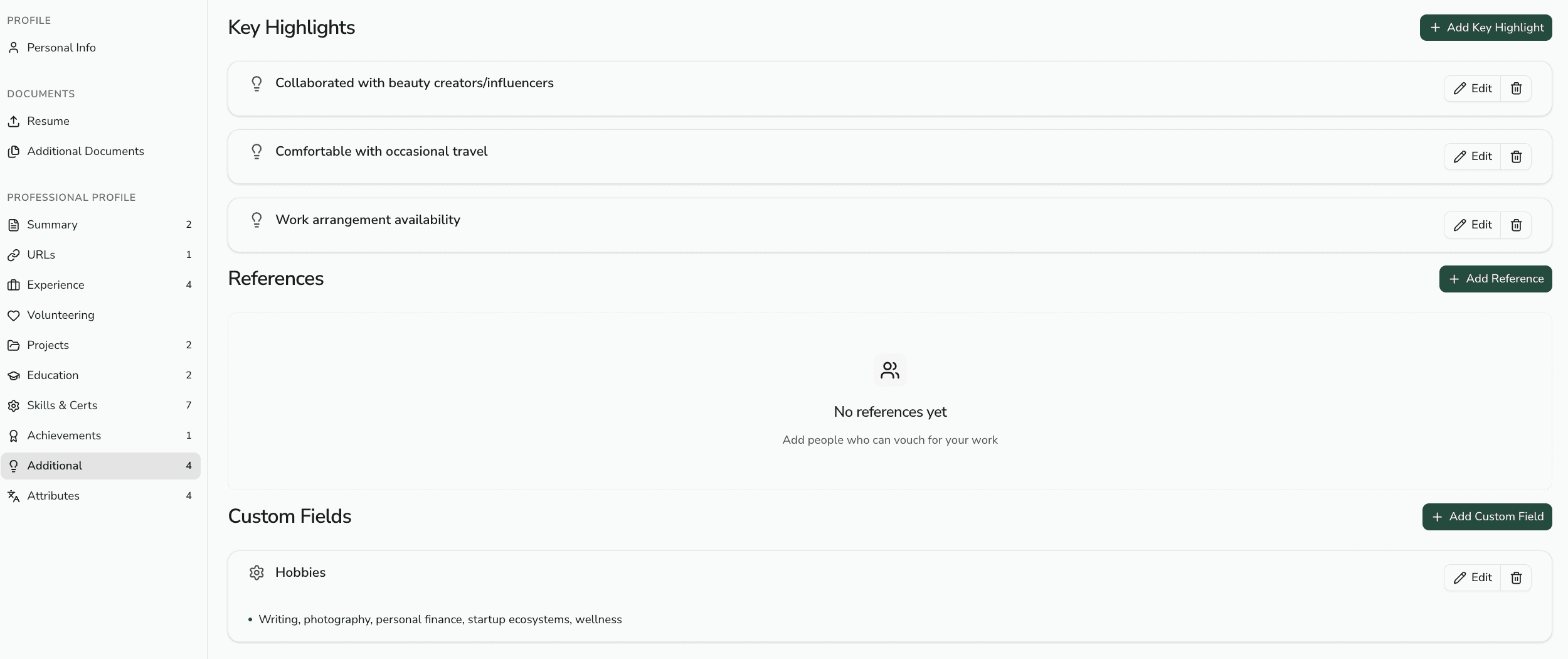
Hobbies work best when they’re flexible, not buried in a fixed resume template. Sprout gives you the option to add hobbies and other nontraditional sections directly to your profile through custom fields, alongside standard sections like experience, education, and skills.
As shown above, you can create a dedicated Hobbies field or add other custom highlights such as work preferences, travel availability, or role-specific attributes. When you apply, Sprout decides how and when to surface these fields based on what the job description emphasizes. A role that values collaboration may surface volunteer or team-based hobbies, while a startup role may prioritize creative or project-driven interests.
This lets you keep hobbies relevant and role-specific without manually editing your resume for every application. Everything stays clean, structured, and ATS-friendly, while still giving you room to show personality and transferable strengths where they actually matter, without requiring you to manually rewrite this section dozens of times while maintaining an authentic, human tone.
FAQs
Should I include hobbies on my resume if I have over 10 years of experience?
No, skip the hobbies section if you have 10+ years of work history. Use that space to showcase your professional achievements and measurable results instead, which carry more weight with hiring managers reviewing experienced candidates.
What's the difference between listing "reading" versus "publishing monthly blog posts" as a hobby?
"Reading" is a passive interest that shows no skill development, while "publishing monthly blog posts" is an active hobby showing commitment, writing ability, and consistency. Always choose hobbies that show what you do instead of what you passively enjoy.
When should recent graduates include hobbies on their resume?
In most cases, include hobbies if you're a recent graduate with limited work experience. Focus on activities showing initiative like student club leadership, volunteer coordination, or personal projects (building an app, running a blog) that show job-ready skills and fill gaps in your work history.
Final Thoughts on Resume Hobbies and Interests
Hobbies and interests examples can quietly strengthen your resume when they reinforce skills the role already values and add dimension to your experience. They matter most for early-career candidates, career switchers, or anyone filling gaps, but only when they stay relevant, specific, and limited to a short list of 3–5 activities. Each entry should support your narrative, not distract from it or introduce unnecessary bias. Sprout helps apply this approach at scale by tailoring hobbies and interests examples for each role, featuring what that employer values while keeping formatting clean and ATS-friendly.