

Summary
Master 150+ common work interview questions with proven frameworks & strategies. Learn how to answer behavioral, technical & situational questions in Feb. 2026.
You can prepare solid answers to common work interview questions about your background and goals, but interviews often turn when you’re asked about failure, pressure, or how you think on the spot. Those moments reveal how you reason, communicate, and apply your experience in real situations, which is often what separates an average interview from a job offer. Strong preparation goes beyond memorizing answers and starts with having application materials that clearly support your stories, backed by smart career tools that help align your experience with what employers are actually screening for.
TLDR:
Master the 7 core questions (tell me about yourself, strengths, weaknesses) using proven frameworks.
Use STAR method for behavioral questions to answer without rambling in under 2 minutes.
97.8% of Fortune 500 companies use ATS systems that filter resumes before human review.
Practice answers out loud beforehand since 49% of employers decide fit in the first 5 minutes.
Some solutions create ATS-friendly, tailored resumes for each role to help you pass filters and land interviews.
The 7 Most Common Work Interview Questions (And How to Answer Them)
Every interviewer has their go-to questions, and you'll face these seven in nearly every conversation. Here's how to tackle each one with a clear framework.
Tell me about yourself. Use the present-past-future structure: where you are now professionally, how you got here, and why you're interested in this role. This mirrors how you'd write a professional resume summary. Keep it under 90 seconds.
Why do you want this job? Connect the role's responsibilities to your career goals and skills. Mention something specific about the company that drew you in.
What are your strengths? Pick two strengths directly relevant to the job description. Focus on key resume skills that match what employers are seeking. Follow each with a concrete example of when you used that strength.

What are your weaknesses? Choose a real weakness that won't disqualify you, then explain how you're actively working to improve it.
Where do you see yourself in five years? Show ambition within a realistic path at this company.
Why should we hire you? Summarize your top qualifications and how they solve the company's needs for this position.
Why did you leave your last job? Stay positive and brief. Focus on what you're looking for next, not what went wrong before.
Behavioral Interview Questions That Assess Your Past Performance
Behavioral questions assess your work history to predict how you'll handle future situations. Instead of asking what you would do, interviewers ask what you did do. Past behavior often indicates future performance.
The STAR method gives you a framework to answer these questions without rambling. Situation sets the scene briefly. Task explains what you needed to accomplish. Action describes the specific steps you took. Result shares the outcome with numbers when possible.
Here are the behavioral questions you'll encounter most often:
Question Category | Example Questions | STAR Framework Focus | Key Tips |
|---|---|---|---|
Teamwork and Collaboration | Describe a time you worked with a difficult team member; Tell me about a successful team project you contributed to; How do you handle disagreements with coworkers? | Focus on your specific role within the team and how you managed cooperation or resolved interpersonal challenges | Place emphasis on communication skills and emotional intelligence; show you value diverse perspectives and can adapt your working style |
Conflict and Pressure | Give an example of a time you faced a tight deadline; Describe a conflict you resolved at work; Tell me about a time you failed and what you learned | Place emphasis on your problem-solving process under stress and specific steps you took to tackle the situation constructively | Stay professional when discussing conflicts; focus on resolution and learning instead of blame; quantify results when possible |
Problem-Solving and Initiative | Share an example of a creative solution you developed; Describe a time you went above and beyond your job duties; Tell me about a challenge you overcame without direct supervision | Detail the analytical thinking behind your approach and show ownership of outcomes beyond basic job requirements | Choose examples that align with the target role's requirements; show novelty and self-motivation; include measurable impact |
Leadership and Influence | Describe a time you led a project or initiative; Tell me about when you had to persuade others; How have you mentored or trained colleagues? | Show your ability to inspire action, make decisions, and guide others toward shared goals even without formal authority | Leadership extends beyond management positions; show initiative, strategic thinking, and how you empowered others to succeed |
Adaptability and Change | Tell me about a time you had to learn something quickly; Describe how you handled a major change at work; Give an example of pivoting strategy mid-project | Put a spotlight on your flexibility, learning agility, and ability to maintain performance during uncertainty or transitions | Show growth mindset; explain how you assessed new information and adjusted approach; show resilience |
Teamwork and Collaboration

Describe a time you worked with a difficult team member. Tell me about a successful team project you contributed to. How do you handle disagreements with coworkers?
Conflict and Pressure
Give an example of a time you faced a tight deadline. Describe a conflict you resolved at work. Tell me about a time you failed and what you learned.
Problem-Solving and Initiative
Share an example of a creative solution you developed. Describe a time you went above and beyond your job duties. Tell me about a challenge you overcame without direct supervision.
Situational Interview Questions about Hypothetical Scenarios
Situational questions present hypothetical scenarios instead of asking about your past: "What would you do if a client demanded an impossible deadline?" or "How would you handle learning about a coworker's mistake?"
These questions test your judgment and problem-solving approach. Walk through your thought process out loud. Start by clarifying the situation if needed, then explain how you'd gather information, consider options, and make a decision. Reference company values or industry best practices when possible.
Common situational questions include: What would you do if you disagreed with your manager's decision? How would you focus on conflicting projects? What would you do if you noticed a team member struggling? How would you handle receiving criticism you felt was unfair?
Your answer matters less than showing logical thinking and alignment with the role's requirements.
Technical and Role-Specific Interview Questions
Technical questions change based on your role, so one-size-fits-all prep doesn't work. A software engineer gets coding challenges. A marketing manager answers campaign metric questions. A nurse handles clinical scenarios.
Review the job description and spot the core technical skills. Tailoring your resume to job descriptions helps you prepare targeted examples for technical questions. Research common interview questions for that specific role and industry. Check forums like Reddit or Glassdoor where candidates share actual questions from that company.
Many technical interviews include live demonstrations: writing code, analyzing datasets, presenting portfolios, or solving case studies. Practice these formats. If you're interviewing for a data analyst role, work through sample SQL queries. For a design position, prepare to walk through your portfolio.
Industry certifications, tools, and terminology matter too. Know the vocabulary and standards for your field.
Questions You Should Ask the Interviewer
Interviews run both ways. Your questions show how seriously you're considering the role and help you decide if this job fits your goals. This research also prepares you to negotiate a job offer confidently.
Ask about the role itself: What does success look like in the first 90 days? What are the biggest challenges facing the team right now? How is performance measured?
Team and culture questions: What's the team structure? How does the team collaborate day-to-day? What's your management style?

Growth questions show long-term thinking: What learning opportunities exist? How does the company support career advancement?
Company direction: What are the company's goals for the next year? How has the team evolved recently?
Prepare three to five questions and adjust based on what gets covered during the interview. Tracking your job applications helps you remember which questions you asked at each company.
How to Answer Interview Questions Confidently
Confidence shows up in how you speak and carry yourself. 49% of employers know within the first five minutes whether a candidate fits the position, so your delivery matters from the start.
Practice out loud beforehand. Rehearse your answers to common questions while sitting upright. Record yourself to catch filler words. The more familiar your responses feel, the less you'll second-guess yourself.
Control your pace. Nervous candidates rush. Take a breath before responding. Pause mid-answer if needed. Silence feels longer to you than to the interviewer.
Body language reinforces your words. Maintain eye contact, sit up straight, and use hand gestures naturally. These cues signal confidence even when you don't fully feel it yet.
If you blank, buy time by asking for clarification. Honesty works: "Let me think for a moment." Interviewers respect thoughtful pauses over rambling.
Preparing Your Application Materials for Interview Success
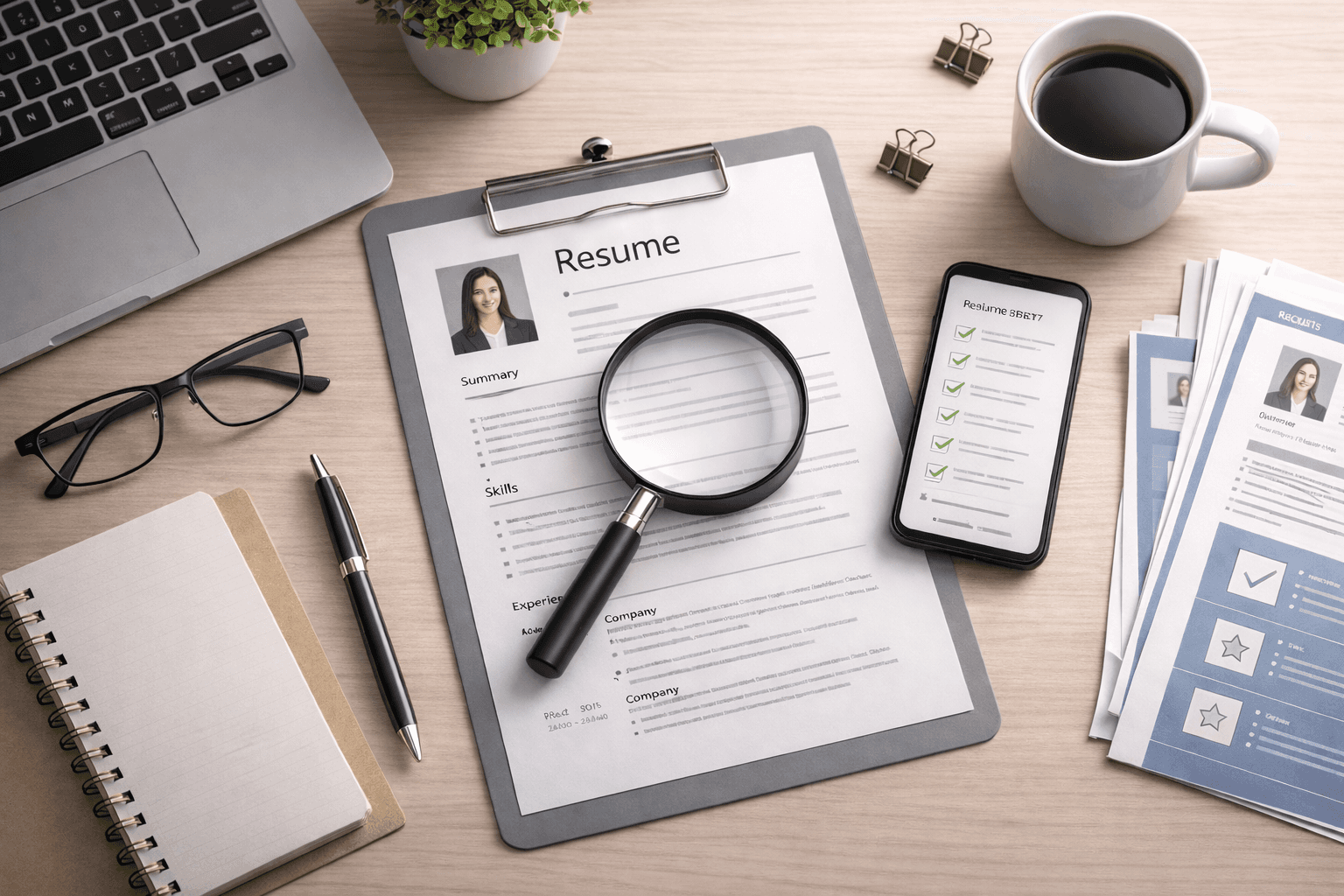
Your interview starts before you walk in the room. 97.8% of Fortune 500 companies use applicant tracking systems, meaning 489 out of 500 screen applications before humans review them. If your resume doesn't pass ATS filters, you never reach the interview stage.
ATS-friendly formatting requires standard section headers, clean layouts without tables or text boxes, and keywords matching the job description. Your resume should mirror the language employers search for without stuffing irrelevant terms.
Interview prep connects directly to application quality. Interviewers reference your resume throughout the conversation, asking about specific experiences you listed. When your application accurately reflects your skills with relevant examples, answering behavioral questions becomes straightforward since you're expanding on what's already documented there.
How Sprout Helps You Land More Interviews
Getting interviews requires more than great answers. You need applications that reach human reviewers. Sprout's AI creates tailored resumes and cover letters for each role, embedding keywords from that specific job description into your experience bullets. We pull the exact skills and terms each employer filters for, then rewrite your accomplishments to naturally include them while maintaining ATS-friendly formatting with standard headers and clean layouts that 97.8% of Fortune 500 ATS systems can parse correctly.
When your applications mirror each job's requirements, you pass automated filters and land in front of recruiters. You also have a clear foundation for interview answers since your resume already connects your background to their needs. We track every application in one dashboard, similar to dedicated job application tracker tools, so you remember which version went where when interview invites arrive.
FAQs
How long should my answer to "Tell me about yourself" be?
Keep your response under 90 seconds using the present-past-future structure: where you are now professionally, how you got there, and why you're interested in this specific role.
How many questions should I prepare to ask the interviewer?
Prepare three to five thoughtful questions about the role, team dynamics, growth opportunities, and company direction, then adjust based on what gets covered during your conversation.
What makes a resume ATS-friendly?
ATS-friendly resumes use standard section headers like "Work Experience" and "Education," avoid tables or text boxes that break parsing, stick to simple fonts with clean layouts, and include keywords matching the job description naturally within your experience bullets.
Final Thoughts on Interview Question Strategies
Strong performance in work interview questions comes from preparation that starts well before the conversation itself. When your resume and application match each role closely, interviews become a continuation of a story you’ve already told clearly and credibly. Tools like Sprout support this process by helping you apply with resumes that pass automated screening and reflect the skills employers ask about during interviews. Pair that foundation with structured answers, real examples, and spoken practice, and you walk into each interview focused, calm, and ready to explain why you’re the right fit.