

Summary
Complete guide to AI job application bots in February 2026. Learn how automation tools tailor resumes, beat ATS systems, and boost interview rates 3-5x.
You can spend 45 minutes tailoring a single application, or you can use an AI job application bot that does it in under a minute. While you’re manually editing bullet points and rewriting cover letters, other candidates are applying to five times as many roles with resumes customized for each posting. The gap isn’t just speed; it’s strategy. The best bots don’t mass-send generic templates; they adapt your experience to match job-specific keywords, align with ATS filters, and adjust tone to fit each company. In this guide, you’ll learn how these tools actually work, what separates high-performing automation from rejection magnets, and how using the right solution can raise your interview rate without turning your search into a second job.
TLDR:
AI job bots automate applications by tailoring resumes and cover letters per role in under a minute.
Targeted applications see 3-5x higher interview rates than mass-applying to every posting.
ATS systems now auto-reject 64% of mismatched applicants, making keyword alignment critical.
Free tools cap at 10-30 monthly applications with generic templates; paid options offer better tailoring.
Some modern tools generate ATS-friendly, personalized applications with swipe-to-apply and track everything in one dashboard.
What AI Job Application Bots Are and How They Work
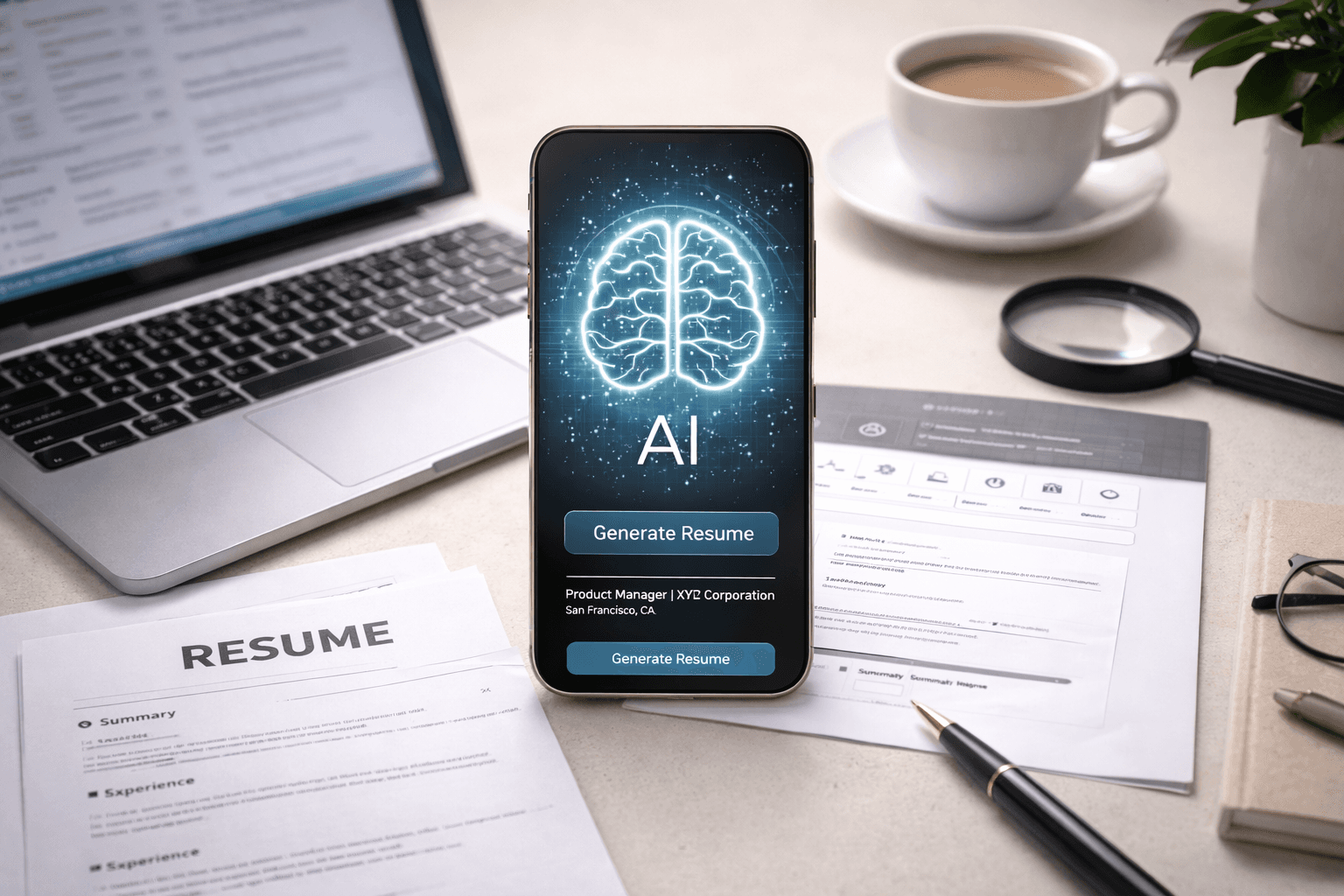
AI job application bots are software tools that automate the job application process using AI to fill out forms, customize resumes and cover letters for specific postings, and submit applications without manual effort.
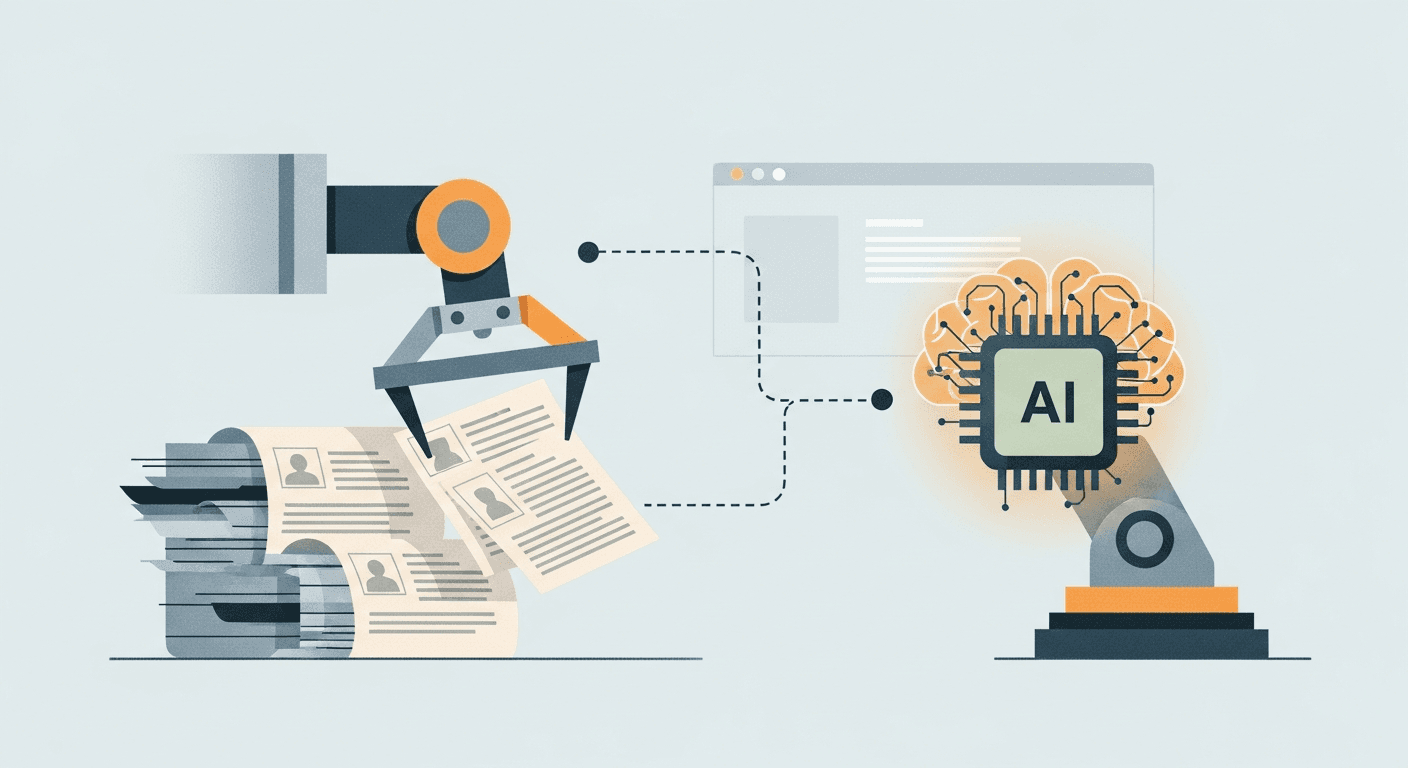
Most bots pull job listings from boards and career pages, then let you filter by location, industry, or title. The AI scans each job description and adjusts your materials to match, swapping keywords, reordering skills, or rewriting sections to mirror the posting's language.
After tailoring, the bot populates application fields with your profile data (contact info, work history, education). It handles simple forms in seconds and can also complete multi-page systems like Workday, answering screening questions and attaching documents. Finally, it logs submissions and status updates in a dashboard.
The State of AI Job Applications in 2026
Job seekers have gone all-in on AI. A growing share of job seekers now use AI to polish their resumes, and that number keeps climbing. What started as a fringe hack is now standard practice.
The shift makes sense. Application volumes per role have doubled since 2022, and recruiters spend six seconds scanning each resume. If your competition is using AI to tailor every application and you're manually copying and pasting, you're behind before you hit submit.
How AI Job Application Bots Save Time and Increase Application Volume
A manual job application takes 30 to 45 minutes when you count resume tweaking, cover letter writing, and form filling. If you're applying to ten jobs per week, that's five to seven hours gone.
AI bots collapse that timeline. Users can apply to 50+ jobs daily because the bot handles tailoring and submission in under a minute per role. That weekly batch of ten applications now takes ten minutes instead of an afternoon.
The volume jump matters, but only when paired with quality. Bots that fire off hundreds of identical applications get filtered by ATS or ignored by recruiters who spot generic copy.
ATS Optimization and Keyword Matching with AI Bots
ATS systems now fight back with their own AI. 79% of organizations use AI or automation in their applicant tracking systems, and 64% deploy it to auto-reject candidates who don't match filters.
AI job bots counter this by pulling keywords straight from each job description and embedding them into your resume. Instead of hoping your "project management" experience matches a posting that asks for "cross-functional coordination," the bot rewrites your bullets to mirror that exact phrasing. ATS systems scan for keyword density and match percentage, so bots that align your language to the job description score higher during automated screening.
Resume and Cover Letter Personalization at Scale
Personalization separates bots that land interviews from those that flood inboxes with rejections. The difference lies in what happens between reading a job description and hitting submit.
Basic bots swap keywords and call it tailored. Better ones rewrite entire resume bullets to match the job's language, reorder your experience to focus on what that role values, and adjust tone to mirror the company's voice. A startup might get a resume stressing speed and experimentation, while a corporate role gets structured achievements and process improvements.
Cover letters work the same way. AI pulls the company's mission, recent projects, or growth initiatives from the posting and weaves them into your letter.
Doing this manually for 50 applications per week is unrealistic. AI handles customization in seconds per application.
Application Response Rates and Interview Success Metrics
The average job seeker converts just 2% of applications into interviews. AI bots improve these odds by matching your resume to what ATS filters scan for and tailoring content to what hiring managers want to see.
Response rates jump when applications hit role-specific keywords and skip generic phrasing. Well-targeted, customized applications often see meaningfully higher interview rates than generic mass applications.
Track three metrics: applications sent, responses received, and interviews scheduled. If your response rate stays under 3% after 50+ applications, your bot isn't tailoring enough or you're applying too broadly.
Free vs. Paid AI Job Application Tools
Free tools cap applications at 10-30 per month and offer basic auto-fill without much tailoring. Most free bots use generic templates that ATS systems flag, and tracking features are minimal or nonexistent.
Paid tools unlock higher limits (50-200+ applications monthly), deeper personalization per job, and better ATS optimization. The AI rewrites resume bullets to match each posting instead of using one-size-fits-all templates. You also get application tracking, cross-device sync, and support.
Feature | Free Tools | Paid Tools | Sprout |
|---|---|---|---|
Monthly Application Limit | 10-30 applications with hard caps | 50-200+ applications depending on tier | High-volume swipe-to-apply applications |
Resume Personalization | Generic templates with minimal keyword swapping | AI rewrites resume bullets to match job-specific language | Full resume rewrite per job with keyword extraction and experience reordering |
Cover Letter Customization | Basic templates with company name swap only | Tailored cover letters including job requirements | Custom cover letters weaving in company mission and recent projects |
ATS Optimization | Basic formatting, often flagged by systems | ATS-friendly formatting with keyword density matching | ATS-friendly across all systems with clean layouts and proper parsing |
Application Tracking | Minimal or no tracking features | Dashboard with status updates and submission logs | Thorough dashboard showing all submissions, materials sent, and interview callbacks |
Platform Coverage | Limited to 1-2 major job boards | Multiple job boards including LinkedIn, Indeed, Glassdoor | Verified company career pages plus trusted boards with daily refresh |
Expected Response Rate | 1-2% interview conversion rate | 4-6% interview conversion with proper targeting | Users have landed 2,738 interviews in a single month at Fortune 500 companies |
If you're casually searching, free tools work. If you're actively hunting and need quality applications at scale, paid options deliver higher response rates.
Common Mistakes to Avoid When Using AI Job Application Bots
Applying to every posting without filters tanks your response rate. Set tight filters for role type, seniority, and industry before automating to avoid diluting your stats.
Dream jobs deserve manual review. If a role at your target company appears, pause automation, read the posting carefully, and customize your materials to highlight what the AI might miss.
Ignoring your metrics keeps you stuck. If you're under 3% after 50 submissions, your targeting is too broad or tailoring isn't working. Adjust filters or upgrade your bot.
Bots get you interviews but don't prep you for them. Review which companies called back and block time to research each opportunity, or you'll waste the leads your bot generates.
Quality over Quantity: Targeting Strategy for Better Results
Sending 300 applications per month feels productive until none convert. Targeted applications see 3-5x higher response rates than spray-and-pray approaches.
Define criteria first: required skills you have, seniority matching your experience, industries you understand, companies whose missions align with yours. Review each job description. If you match eight out of ten requirements, apply. If you match four, skip it. Weak-fit applications tank your response rate.
Focus on roles where your background solves the company's actual needs. Bots can tailor resumes, but misaligned fundamentals kill your chances.
Application Tracking and Organization Features
When you're sending 30+ applications per week, a spreadsheet breaks down fast. Dates blur, companies overlap, and follow-ups slip through.
AI bots solve this with dashboards that log every submission automatically. You see which jobs you applied to, when, what materials went out, and current status (pending, reviewed, interview scheduled, rejected).
The tracking removes guesswork. Instead of wondering if you already applied to that role or which version of your resume got sent, the dashboard answers instantly.
Platform Compatibility and Job Board Coverage
Bots pull jobs from different sources, and coverage gaps mean missed opportunities. Some scrape LinkedIn and Indeed, others pull from Glassdoor or ZipRecruiter. The best ones tap company career pages directly, where roles appear first and data stays current.
ATS compatibility matters more than board coverage. Workday, iCIMS, Greenhouse, and Lever run most corporate applications. Bots that can't handle these systems skip the roles worth applying to.
Sprout pulls from verified company career pages and trusted boards, refreshing listings daily to filter out expired or duplicate postings.
How Sprout Combines Automation with Personalized, ATS-Friendly Applications
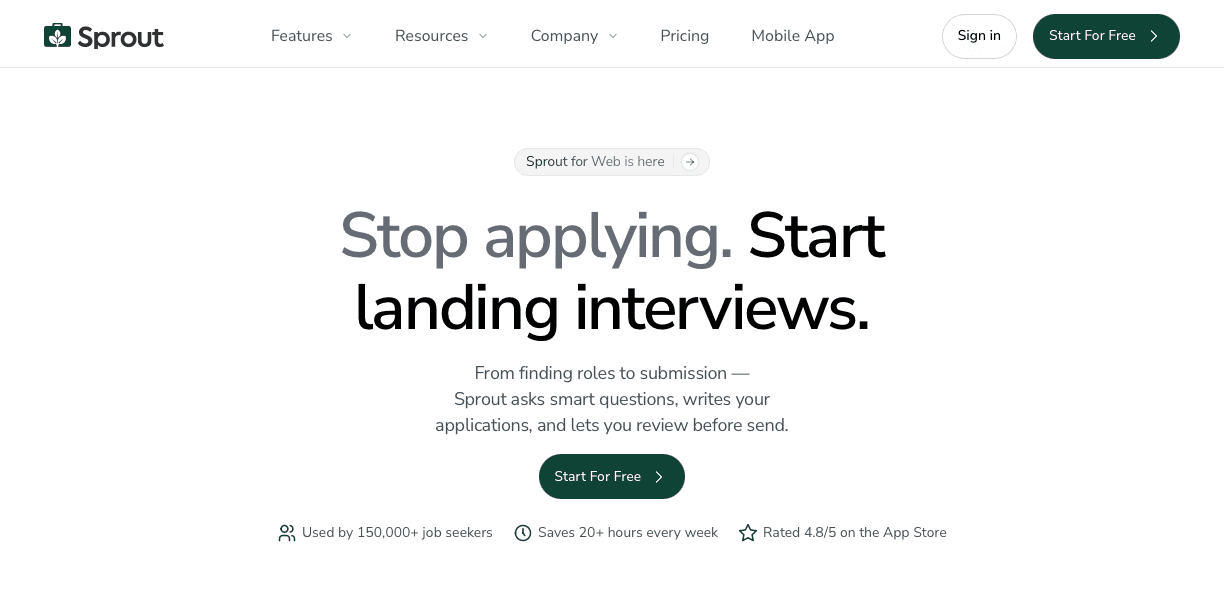
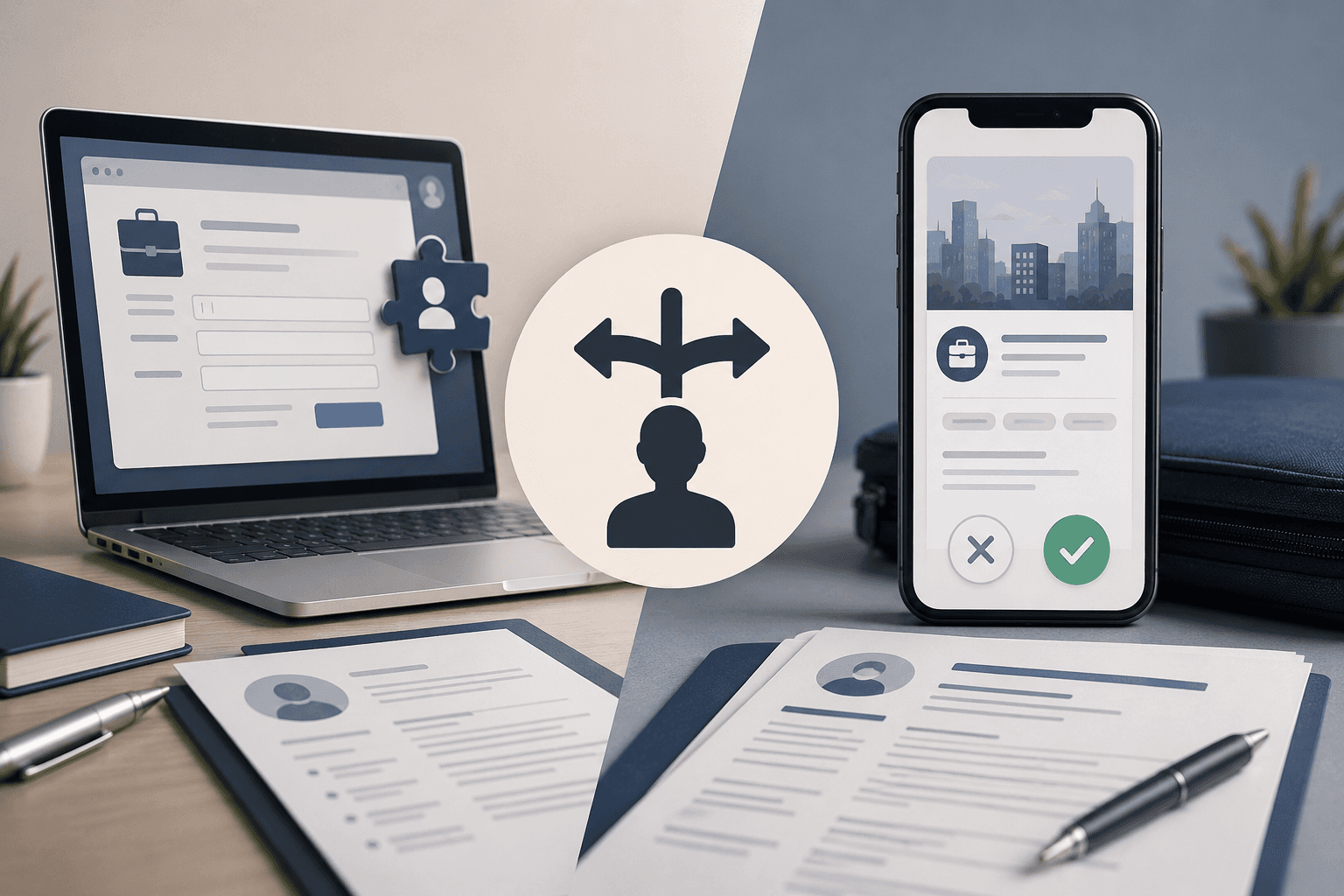
Sprout's swipe-to-apply interface lets you choose which roles to target, then handles tailoring and submission in seconds. Each swipe triggers AI that rewrites your resume and cover letter for that job, pulling keywords from the description and reordering your experience to match what the role focuses on.
The formatting stays ATS-friendly across every application: standard headers, clean layouts, and simple fonts that tracking systems parse correctly. No tables, text boxes, or multi-column formats that break scans.
Your dashboard logs every submission automatically. You see which resume went where, what got submitted, and current status without juggling spreadsheets or email threads.
Users have landed 2,738 interviews in a single month at companies like JPMorgan, Nike, Johnson & Johnson, and Wells Fargo.
FAQs
How many applications should I send per week with an AI job bot?
Focus on 30-50 quality applications per week instead of maximizing volume. Bots that target roles matching your actual experience see 3-5x higher response rates than spray-and-pray approaches sending 300+ monthly applications.
How do I know if my AI bot is actually working?
Track your response rate after 50 applications. If you're under 3%, your targeting is too broad or the bot isn't tailoring enough. You should see which jobs got responses, what materials were sent, and interview callbacks in your dashboard without guessing.
Should I manually review applications before my bot submits them?
Set tight filters upfront for role type, seniority, and industry so automation only targets relevant jobs. For dream roles at target companies, pause the bot and manually customize your materials to highlight details AI might miss.
Final Thoughts on Automated Job Applications
An AI job application bot should do more than send volume. It should help you apply smarter, track what’s working, and turn effort into real interview momentum. If your response rate stalls after dozens of applications, that’s a signal to refine your targeting or upgrade your tools. The right system doesn’t just automate submissions; it rewrites, aligns, and organizes every application so you stay competitive without burning out. With Sprout’s AI job application bot, you can move from scattered applications to structured, high-quality outreach that gets you to the interview stage faster and lets you focus on preparing to win the offer.