

Summary
Learn what employment history appears on background checks in March 2026, how verification works, and why keeping dates consistent across applications matters.
You finally land an offer and then the background check begins, which often leads to one question: can background check show employment history you never listed on your resume? Many job seekers assume companies can see every job they have ever held through some centralized database, but hiring teams usually verify the roles you report by contacting employers or checking payroll verification systems. Problems usually appear when job titles, dates, or references conflict with what you submitted across applications. Keeping your employment details consistent becomes much easier when you track every application in one place with modern tools, which helps maintain accurate dates and records while you apply to multiple roles. Understanding how employment verification actually works can remove a lot of the uncertainty before a background check even starts.
TLDR:
Background checks verify jobs you list, not every role you've held; no master database exists.
Most checks show job titles, dates, and rehire status but rarely reveal why you left.
Minor date errors get clarified; fabricated roles or titles end offers immediately.
Many employers focus on the last 7-10 years of employment history, though verification can extend further depending on the role.
Some newer solutions track every application you send so your dates and details stay consistent across roles.
Do Background Checks Show Employment History?
The short answer is: sometimes, but not always. Whether employment history appears on a background check depends on what type of screening your potential employer orders and how deep they dig.
There's no single national database tracking every job you've held. The IRS doesn't share your W-2 history with background check companies, and Social Security records aren't available for employment verification purposes. If an employer wants to confirm where you've worked, they need extra steps beyond a basic criminal background check.
Most standard background checks focus on criminal records, identity verification, education credentials, and other basic information. Employment verification is a separate add-on service that costs extra and requires more time. Some employers skip it entirely to save money or speed up hiring. Others only verify the positions you list on your resume, not your complete work history.
What Information Appears on an Employment Background Check
Check Type | Job Titles & Dates | Salary Info | Reason for Leaving | Rehire Status | Performance Details |
|---|---|---|---|---|---|
Basic Criminal Check | No | No | No | No | No |
Standard Employment Verification | Yes | Sometimes | Rarely | Yes | No |
Full Background Check | Yes | Yes (where legal) | Sometimes | Yes | Rarely |
The Work Number Database | Yes | Yes | No | Sometimes | No |
Executive/Security Clearance | Yes | Yes | Often requested | Yes | Sometimes |
When an employer orders an employment verification, the background check company contacts your previous employers directly and requests specific details. What they receive varies, but most verification reports include a standard set of data points:
Your job title or position held at each company
Start and end dates of employment, usually reported as month and year
Work location or department where you were assigned
Eligibility for rehire status, often listed as "yes," "no," or "not disclosed"
Salary or pay rate, if the employer records it and company policy allows it to be shared during verification
Many companies limit what HR departments can disclose. Large employers often use automated verification services like The Work Number, which release only dates and titles. Smaller companies might provide more or less detail depending on their internal policies and legal concerns about defamation.
One thing rarely appears: performance reviews or reasons for leaving. Most employers won't share why you left or whether you were fired unless directly asked and legally permitted to answer.
Will an Employment Background Check Reveal Jobs You Didn't Disclose
Background checks verify what you report, not every job you've ever held. Screening companies don't access a master employment database. But if your past employer submits payroll information to The Work Number, that record exists independently of your disclosure.
The real problem surfaces when timelines don't match or references mention roles you omitted. A short retail gig rarely matters. Hiding a relevant position or termination that surfaces during reference checks creates trust issues that can derail an offer.
Research shows that over half of applications contain inaccuracies. Employers expect candidates to omit brief stints. The difference lies in whether the omission raises questions about your honesty or qualifications for the role.
Do Background Checks Show if You Were Fired or Terminated?
Most background checks won't spell out that you were fired. Background screeners contact your former employer and ask whether you're eligible for rehire, not why you left. The answer typically comes back as yes, no, or "not disclosed."
A "no" for rehire doesn't automatically mean you were fired. You might have left on bad terms, violated company policy, or simply be ineligible due to internal rules. Many employers mark anyone who left within 90 days as ineligible, regardless of circumstances.
What won't appear is the word "terminated" or details about your exit. Most employers limit what they share due to company policy and potential defamation liability. HR departments stick to dates, titles, and rehire status to avoid legal trouble.
In some cases, screeners or hiring managers may ask additional questions during verification or reference calls. If a hiring manager phones your old boss directly and asks pointed questions, they might learn more than what appears on paper. That's why listing references carefully matters.
How Employers Actually Verify Employment History
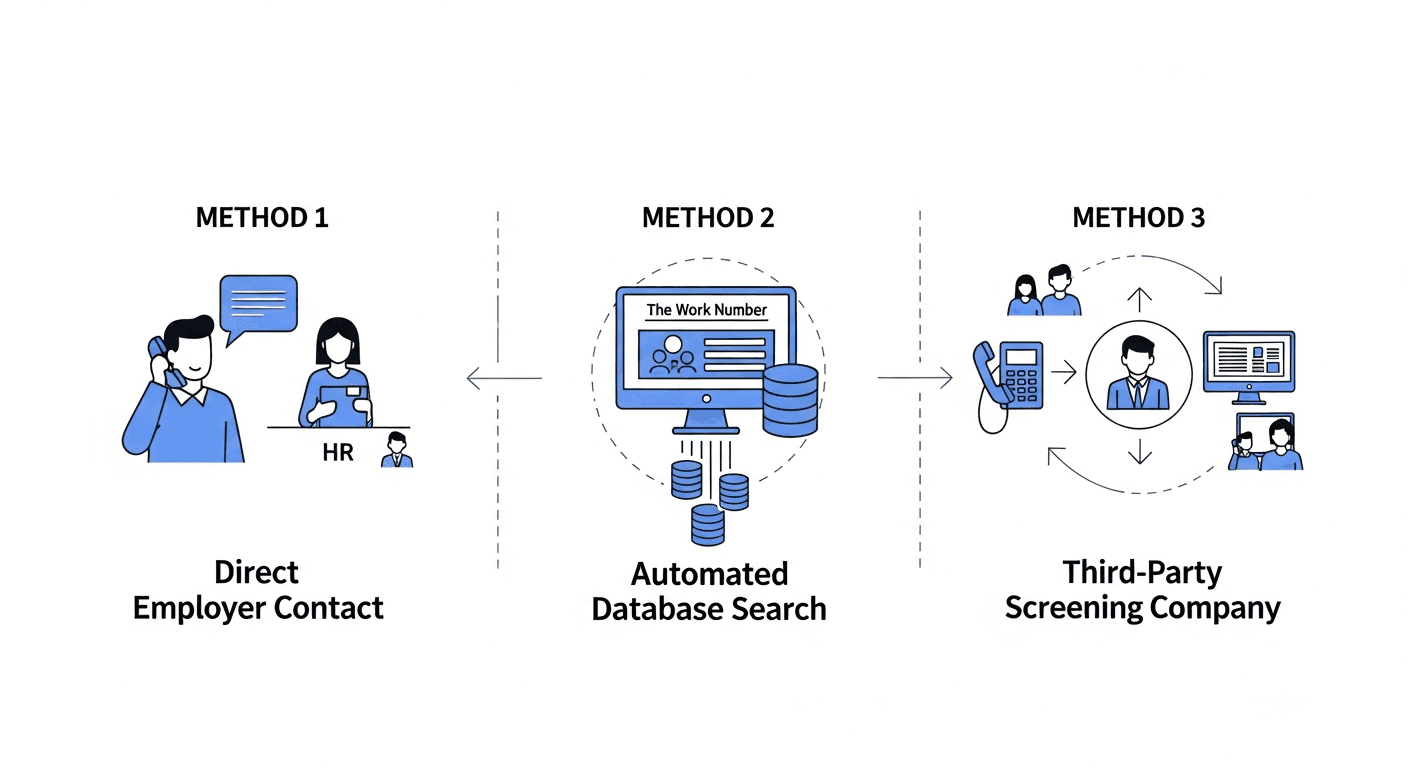
Employers verify employment through three main methods: direct contact, database lookups, and third-party screening services. Each approach varies in speed, cost, and depth.
Direct Employer Contact
The oldest method involves calling or emailing your previous employer's HR department. A screener asks for dates, titles, and rehire eligibility. This works for small companies without automated systems, but it's slow and depends on HR staff responding promptly.
Automated Database Searches
The Work Number database holds over 813 million records. Many employers and payroll providers submit payroll and employment records to this system. When your past employer uses one of these services, verification can happen quickly without phone calls.
Third-Party Screening Companies
Background check firms like HireRight, Checkr, or Sterling combine both approaches. They often check databases like The Work Number first when available. If no record exists, they contact employers manually. Most employers choose the cheapest option that meets their needs. Entry-level roles might get a quick database check. Executive positions often trigger manual calls to every reference.
What Happens When Employment Dates or Details Don't Match
Minor date errors happen frequently. If you write "June 2022" but your employer reports "July 2022," most hiring managers ask for clarification instead of rescinding an offer. Memory fades, especially for roles you held years ago. A one or two month gap rarely signals dishonesty.
Bigger gaps raise red flags. If you claim three years at a company but verification shows eighteen months, employers assume you're hiding something. The same applies to inflated job titles. Claiming you were "Marketing Manager" when you were actually "Marketing Coordinator" looks like deliberate misrepresentation, not an honest mistake.
When discrepancies surface, the screening company flags them and contacts you for explanation. You'll have a chance to provide pay stubs, offer letters, or corrected dates. Honest errors get resolved quickly when you respond with documentation.
Intentional lies end differently. Fabricating an entire role, degree, or title usually stops the hiring process immediately. Employers view falsified credentials as character issues, not paperwork mix-ups.
How Long Background Checks Keep Employment Records
Many background checks focus on the most recent 7-10 years of employment history, although employers can verify older roles if needed. This mirrors the Fair Credit Reporting Act guidelines for adverse information like bankruptcies and civil judgments.
Higher-level positions often trigger deeper searches. Executive roles, government jobs, or positions requiring security clearance may review your entire career history. Financial services and healthcare employers frequently go back ten years or more when regulatory compliance matters.
Short-term jobs from years ago rarely surface unless they appear in The Work Number database or you include them in your application. If you worked somewhere for two months eight years ago and never mentioned it, most employers won't find it. Verification focuses on what you claim, not digging into every W-2 you've filed.
Legal Considerations and Your Rights During Employment Verification
Federal law requires employers to get your written permission before running a background check. The Fair Credit Reporting Act requires a clear standalone disclosure and written authorization before a background check is conducted.
If something in your background check causes an employer to reject you, they must follow adverse action procedures. You receive a pre-adverse action notice with a copy of the report and a summary of your rights, giving you time to dispute errors before the final decision.
State laws add extra protections. California bans salary history questions. New York restricts credit checks for most positions. Some states limit how far back criminal records can influence hiring decisions.
You can request copies of your background check reports and dispute inaccurate information directly with the screening company. They must investigate within 30 days and correct verified errors.
Building an Accurate Application with AI-Powered Tools
When you're applying to dozens of roles, it gets harder to keep your story straight. You might accidentally use different job titles or dates across applications without realizing it. Sprout saves every resume you send, so you always know what information reached which employer.
The AI tailors each resume by reordering skills and accentuating relevant experience for the role. But your underlying dates and titles stay the same. You're changing emphasis, not facts. When background verification starts, you'll have a clear record of everything you submitted.
The dashboard tracks every application. No guessing what you wrote last month, no scrambling to remember if you mentioned that contract role. Just accurate records that align with what verification will find.
FAQs
Can employers see jobs I left off my resume during a background check?
Background checks verify what you report, not every job you've ever held. However, if a past employer reports your payroll to The Work Number database, that record exists independently and might surface during verification, especially if the timeline gaps raise questions during reference checks.
What happens if my employment dates are slightly wrong on my application?
One or two month discrepancies usually just trigger a request for clarification instead of killing your job offer. Employers understand memory fades, especially for older roles, so bring documentation like pay stubs or offer letters to clear up honest mistakes quickly.
How far back do employment background checks typically look?
Many employers verify the past 7-10 years of employment history, though the Fair Credit Reporting Act does not limit how far back employment verification can go. Executive positions, government jobs, or roles requiring security clearance often go back further, sometimes reviewing your entire career history when regulatory compliance matters.
Final Thoughts on Background Checks and Your Work History
Many job seekers search for “can background check show employment history” when they reach the verification stage of the hiring process. In reality, most checks confirm the jobs and dates you report, not every paycheck you have ever received. Minor date differences usually get clarified with documentation, but fabricated roles or large timeline gaps can quickly end an offer. Keeping accurate records across every application helps avoid those problems, especially when you are applying to many roles at once. Tools like Sprout help you track each resume and application you send so your employment dates, titles, and details stay consistent if a background check begins.