

Summary
25 cultural fit interview questions with expert answers for April 2026. Learn what interviewers test and how to answer without sounding scripted.
When you search cultural fit interview questions, you're trying to understand what hiring teams are judging beneath the surface. They want to see how you think, communicate, and operate. This guide breaks down the most common questions, what they signal, and how to answer them naturally.
TLDR:
Cultural fit measures alignment between your values and a company's real working style, beyond skills alone.
89% of hiring failures trace back to poor cultural fit, making it more critical than technical ability.
Prepare specific examples that show how you work, communicate, and handle conflict before interviews.
Research company culture through employee reviews and leadership posts to filter for genuine fit.
Some modern solutions tailor your resume and cover letter to each company's values and language automatically, so every application feels hand-crafted, not mass-produced.
What Cultural Fit Is and Why It Matters in Hiring
Cultural fit measures how well a candidate's values and behaviors align with how a company actually operates. Get it wrong, and 89% of hiring failures trace back to poor cultural fit. Positive cultures boost retention by 4x, and only 15% of employees who rate their culture highly are actively job hunting.
Question Category | Focus Area | What It Reveals | Red Flag |
|---|---|---|---|
Work Style and Environment | Autonomy, structure, and daily routines | Whether the candidate thrives in your actual setup (remote, hybrid, structured, or fluid) | Can only function one way regardless of team needs |
Team Collaboration and Communication | Async vs. real-time, conflict handling, updates | How they keep teams informed and whether they adapt to different communication styles | Claims to have never had a conflict with a coworker |
Values and Motivation | Intrinsic drivers, definitions of success, engagement | Whether their long-term goals and energy align with the role and company culture | Can't point to a real moment where their values were tested |
Management Style and Feedback | Feedback preferences, direction needed, growth expectations | How much oversight they need and whether your managers can realistically provide it | Requires heavy direction in environments where autonomy is expected |
Adaptability and Problem Solving | Ambiguity tolerance, decision-making, resilience | How they perform when conditions shift or information is incomplete | Can't name a real failure or gives only vague answers about change |
Work Style and Environment Interview Questions

1. Do you prefer working independently or collaboratively?
Look for self-awareness, not a "right" answer. Red flag: someone who can only function one way when your team requires both.
2. How do you structure your workday when given full autonomy?
This surfaces whether someone thrives in unstructured environments or needs defined processes.
3. What does your ideal work environment look like?
Remote, hybrid, quiet focus, or constant collaboration? Their answer should reflect what you actually offer.
4. How do you handle interruptions or shifting priorities mid-task?
Fast-moving teams need people who adapt without losing focus. Slower, process-driven teams need the opposite.
5. Describe the manager relationship where you've done your best work.
A candidate who thrives with weekly check-ins may struggle under a fully hands-off manager.
Team Collaboration and Communication Questions

6. How do you typically prefer to communicate with teammates: async, real-time, or a mix?
Slack-first teams and email-heavy teams are genuinely different cultures. A mismatch here can lead to friction or burnout over time.
7. Tell me about a time you had a conflict with a coworker. How did you handle it?
Skip anyone who says they've never had conflict. You want to hear how they handled it, not that they avoided it.
8. How do you share progress updates when working on a longer project?
Proactive communicators surface blockers early. Reactive ones go quiet until the deadline.
9. Describe how you've worked with someone whose communication style was very different from yours.
This tests flexibility and emotional intelligence, two qualities that directly shape team cohesion.
10. When do you loop in your manager versus handle something yourself?
The answer tells you whether they over-escalate, under-communicate, or have calibrated judgment.
Values and Motivation Interview Questions
11. What kind of work makes you lose track of time?
Intrinsic motivation is a better predictor of long-term performance than any credential.
12. What does success look like to you in this role after one year?
Tells you whether their definition of winning matches yours. Ambition mismatches surface fast once someone is hired.
13. Tell me about a decision you made that felt hard but right.
Values only matter when they're tested. Anyone can list theirs. Far fewer can point to a real moment where they cost something.
"The opposite of engagement isn't laziness. It's misalignment." Ask what drains them, and you'll learn exactly what your culture needs to avoid offering.
14. What causes you to disengage at work?
Ask what drains them and you'll learn exactly what your culture needs to avoid offering.
15. How do you stay motivated when working on something you find repetitive or low-stakes?
Every role has unglamorous work. Whether they can own it without resentment says a lot about long-term fit.
Management Style and Feedback Questions
16. How do you prefer to receive feedback: in the moment, during scheduled reviews, or in writing?
Feedback delivery style matters. If your managers give blunt real-time critiques and a candidate needs time to process privately, that friction compounds fast.
17. Tell me about a time you received feedback you disagreed with. What did you do?
You want to see if they can sit with discomfort, ask good questions, and decide whether to push back or adapt.
18. How much direction do you need when starting a new project?
Some need a clear brief before moving. Others prefer to start and adjust. What matters is whether that preference matches your team's working style.
19. What's the most effective way a manager has supported your growth?
The answer reveals what development investment they expect: mentorship, stretch assignments, autonomy, or structured feedback loops.
20. How do you handle working under a manager you don't always agree with?
Whether a candidate can disagree respectfully and still execute says a lot about day-to-day cultural fit.
Adaptability and Problem Solving Questions
21. Tell me about a time a project changed direction completely. How did you respond?
You want specifics, not "I'm very adaptable." Vague answers here usually mean they haven't been tested yet.
22. How do you make decisions when you don't have all the information?
Fast-moving teams need people who can move with incomplete data. Process-heavy teams may need the opposite.
23. Describe a time you failed at something. What did you do next?
Resilience shows up after failure, not before it. Candidates who can't name a real failure are usually managing perception over giving you useful signal.
24. How do you approach a problem you've never seen before?
This surfaces their thinking process: do they seek input, research independently, prototype quickly? Match that to your team's actual problem-solving culture.
25. What's the most ambiguous situation you've had to handle professionally?
Ambiguity tolerance varies widely. A candidate who freezes without a playbook will struggle in a startup. One who needs to define everything first may find a chaotic team exhausting.
How to Judge Cultural Fit Answers Effectively
Cultural fit assessment goes sideways when "feels like us" becomes the criteria. Start with behavioral evidence. 80% of candidates lie in interviews, so "I'm really collaborative" means nothing without a story behind it. Use a scoring rubric tied to your actual culture and rate each candidate against the same criteria.
Common Mistakes When Assessing Cultural Fit
Confusing similarity with fit. "I could see myself grabbing lunch with them" is affinity bias, not a cultural assessment.
Relying on gut after one interview. Without behavioral evidence across multiple touchpoints, you're largely guessing.
Using vague culture descriptions. If your culture is "collaborative and fast-paced," every candidate will say they love that.
One interviewer making the call. A single perspective misses blind spots. Loop in someone from a different team before deciding.
Balancing Cultural Fit with Skills and Diversity
Inclusive cultures drive 22% higher productivity, so screening everyone through the same lens without flexibility works against you. Separate core values (how someone handles conflict or takes ownership) from flexible preferences like communication style. Filtering on preferences often screens out diverse talent who share your actual values. Cultural fit without skills is just vibes. Skills without alignment is a retention problem.
Using Cultural Fit Insights to Improve Your Job Applications
Cultural fit runs both ways. Smart candidates screen companies just as rigorously as companies screen them.
Before applying, go beyond the careers page. Check Glassdoor reviews, LinkedIn posts from employees, and how leadership communicates publicly. Look for patterns, not outliers.
When writing your cover letter, mirror the language the company actually uses. Learn more about how to start a cover letter that captures attention from the first line. A startup that talks about "building in the open" values something different than an enterprise that leads with "cross-functional alignment." Learning to tailor your resume to job descriptions means reflecting these differences in your application. Your application should reflect that you noticed the difference.
Prepare your own questions too. Just as you craft a professional resume summary to position yourself clearly, prepare questions that reveal what you need to know. Ask about how decisions get made, how feedback flows, and what the last team conflict looked like and how it was resolved. Those answers tell you more than the office tour.
The goal is authentic fit, not performance. Candidates who shape themselves to match every company end up miserable in roles they technically landed. Even when writing a cover letter with no work experience, authentic fit matters more than fabricated alignment.
How Sprout Helps You Apply to Companies Where You'll Thrive
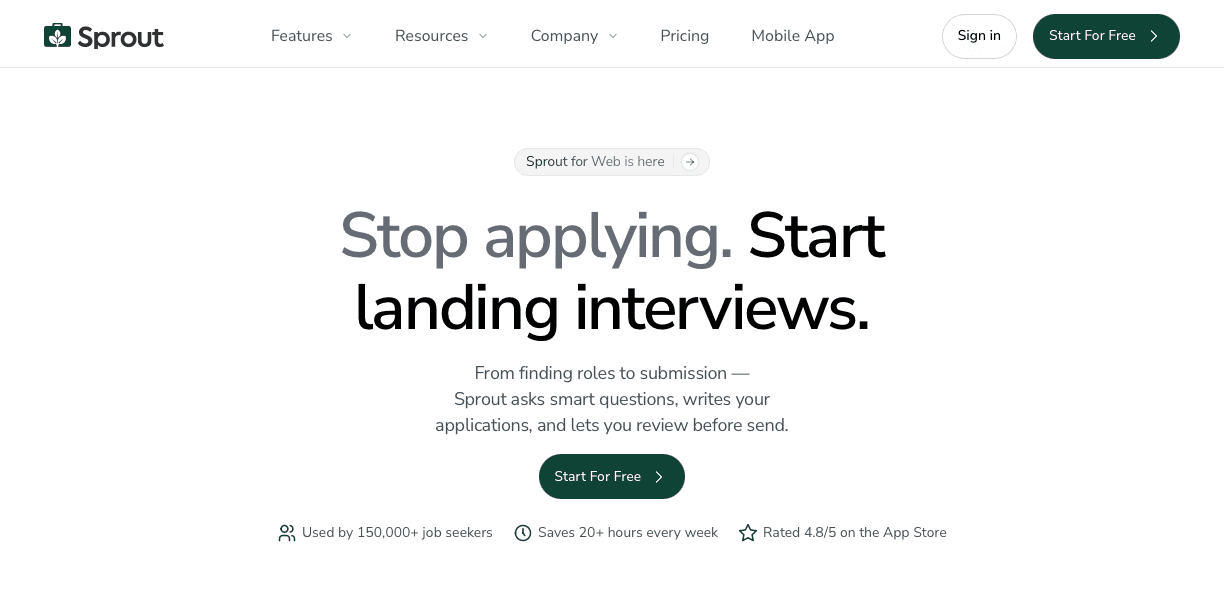
When you apply through Sprout, your resume and cover letter are tailored to each specific role using that job's exact language, values signals, and required skills. If a company talks about ownership and speed, your application reflects that. If they focus on collaboration and process, that comes through too. That kind of mirroring is proof you did your homework.
ATS-friendly formatting means your application survives the initial screen, and keyword alignment means it ranks well once it does. The result: users landed 2,738 interviews in a single month at companies like JPMorgan, Nike, and Wells Fargo. With over 150,000 job seekers and a 4.8/5 App Store rating, Sprout lets you focus on roles where the culture genuinely appeals to you, while it handles the tailoring behind every application.
FAQs
What's the difference between cultural fit and culture add in interviews?
Cultural fit is about alignment with a company's core values and working style, while culture add refers to the unique perspectives a candidate brings to the table. The best hiring processes look for both: someone who shares your values but also brings fresh thinking that strengthens the team.
How many cultural fit questions should I prepare for in an interview?
Most interviews include 3-7 cultural fit questions mixed in with skills-based questions. Prepare stories that show how you handle feedback, work with teams, solve problems under pressure, and stay motivated. These themes come up repeatedly across different question formats.
Can I use cultural fit questions to assess whether a company is right for me?
Yes, and you should. Ask how decisions get made, how the team handles conflict, and what recent feedback looked like. These answers reveal whether the company's actual culture matches what they advertise, helping you avoid roles where you'd be miserable despite having the right skills.
Final Thoughts on Finding the Right Cultural Fit
The gap between cultural fit interview questions and actual hiring decisions is where most mistakes happen. You can ask perfect questions and still default to gut feelings or affinity bias if you're not using a rubric and behavioral evidence to back up your assessments. For candidates trying to find roles where they'll actually thrive, Sprout helps you apply to companies that match your values and working style, beyond your resume alone.