

Summary
Learn how to apply to multiple jobs at once in April 2026. Get the smart strategy for balancing volume with personalization to land more interviews.
Yes, you can apply to multiple jobs at once, and in 2026, you probably should. The question isn’t "Can you apply to multiple jobs at once?" It’s whether you’re doing it in a way that actually leads to interviews. Hiring today runs on volume and filtering, so sending one application and waiting is no longer realistic. Candidates who get traction apply broadly but tailor each submission so it matches what employers are scanning for. That balance is what turns applications into callbacks, and it’s why many job seekers now rely on smarter application workflows that help them move faster without losing relevance.
TLDR:
You need 32-200 applications to land one offer in 2026, with callback rates at just 2-3%.
Apply to 10-20 targeted jobs weekly with tailored resumes that match job-specific keywords.
Applying to multiple roles at one company works if you're qualified for both and space them apart.
Track every application with status, follow-ups, and which resume version you sent.
Some smart application tools can automate keyword-matched resumes and ATS-friendly formatting at scale.
Can You Apply to Multiple Jobs at Once? The Answer Is Yes (With Strategy)
Yes, you can apply to multiple jobs at once. You should be doing it. The 2026 job market has no patience for candidates who submit one application and wait.
Available data and job seeker reports suggest this trend. Depending on your industry and experience level, job seekers now submit anywhere from 32 to over 200 applications before landing a single offer. That reflects how hiring often works in many competitive industries today.
But volume without personalization is just noise. Applying the right way means sending tailored resumes that match each job description's keywords, not generic ones into the void. That balance is what separates candidates who get callbacks from those who just stay busy.
Why You Need to Apply to Multiple Jobs (The Numbers Don't Lie)
The math here is brutal. The average applicant-to-interview rate has collapsed to just 2-3% in 2026, down from 8.4% in 2023 and 15.25% in 2016. That represents a sharp decline instead of a gradual shift.
Several factors have contributed to this change, including easy-apply buttons lowered the barrier to entry, AI screening tools let companies process thousands of candidates overnight, and application volumes exploded as a result. More applicants, faster filtering, fewer callbacks.
If you apply to 50 jobs with tailored resumes, you might get one or two interviews. Generic applications at scale won't move the needle, and waiting on one or two applications is not a strategy. The winning approach combines consistent volume with job-specific customization to maximize your interview conversion rate.
The Quality vs. Quantity Balance: Why Both Matter
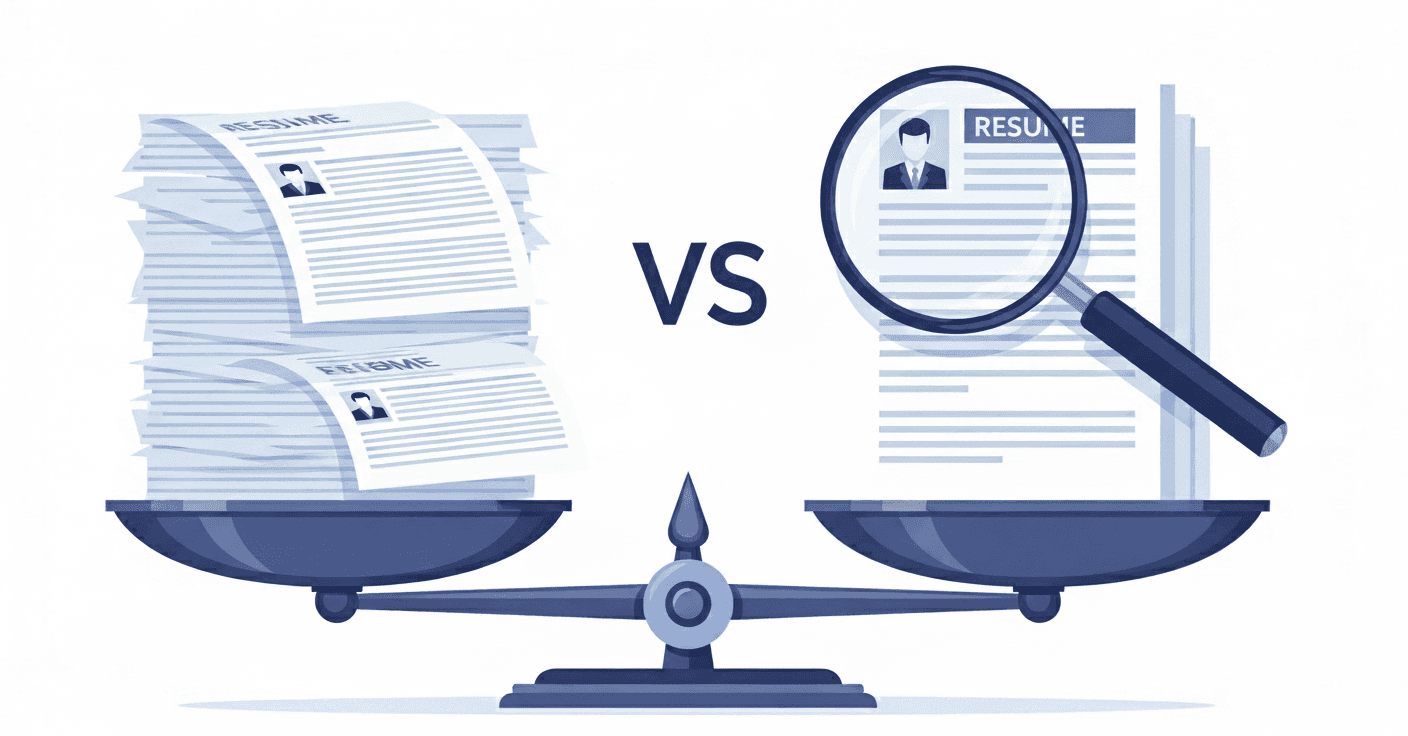
Spray-and-pray fails. So does applying to three jobs and calling it a month. A tailored resume that mirrors a job description's exact language is more likely to rank higher or pass initial screening in ATS systems. A generic one gets filtered out before a human ever sees it. But quality alone won't save you at a 2-3% callback rate. You still need enough at-bats to make the math work.
The goal isn't more applications or better applications. It's better applications.
That means targeting roles you're qualified for, customizing your resume and cover letter for each job, and doing it consistently across 10, 20, or 50 applications a week.
Applying to Multiple Positions at the Same Company: The Strategic Approach
Applying to more than one role at the same company is a legitimate move, but the execution matters.
There are a few conditions where it makes sense:
The roles sit in the same department or require overlapping skills, so your qualifications read consistently across both applications.
You are genuinely qualified for each position, instead of casting a wide net hoping something lands.
You space the applications out by at least a week or two to avoid looking scattershot.
Where it backfires is obvious in hindsight. Applying to a marketing coordinator role and a software engineering role on the same day signals no clear direction. Recruiters notice, and many share notes across departments.
If you apply to two roles, write separate cover letters for each. A recruiter who sees both will compare them, so each needs to stand on its own with job-specific reasoning tied to your background.
A rejection from one role does not disqualify you from another at the same company. Different hiring managers, different timelines. Just leave the rejection out of your next application.
How AI Tools Are Changing the Multi-Application Game
Writing a tailored resume and cover letter for every application used to take hours, which meant most people either applied broadly with generic docs or carefully with too few. AI changed that math.
On the employer side, companies now filter thousands of applicants through ATS systems before a recruiter touches a single resume. On the candidate side, AI tools can assist with generating keyword-matched resumes and role-specific cover letters quickly, helping simplify the application process. Both sides are using AI, which means showing up with a generic application in 2026 is like bringing a flip phone to a smartphone fight. Understanding AI job application bots can level the playing field.
Sprout pulls keywords directly from each job description and rewrites your resume bullets around them, so every application mirrors the exact language ATS systems scan for. That's the difference between clearing the first filter or not.
The Hidden Cost of Applying to Too Many Jobs
More applications aren't always better. Past a certain point, volume starts working against you.
A few things break down when you push too far:
Follow-up becomes impossible. You can't track 300 active applications, which means missed callbacks, forgotten deadlines, and interview no-shows.
Interview conflicts pile up. Scheduling five interviews in a week sounds great until you're rescheduling half of them and leaving a bad impression.
Application quality slips. When you're moving too fast to customize, the tailoring disappears and your callback rate drops anyway.
There's also a reputational cost. Accepting an offer and backing out later can burn bridges, especially in smaller industries where recruiters talk.
Job Search Scenario | Weekly Application Target | Total Applications Needed | Expected Timeline to Offer |
|---|---|---|---|
Entry-level candidate in competitive market (marketing, communications, general business) | 15-20 applications per week | 150-200 applications total | 8-12 weeks with consistent effort and tailored applications |
Mid-career professional with in-demand skills (tech, engineering, finance) | 10-15 applications per week | 50-100 applications total | 5-8 weeks when targeting roles matching your exact skill set |
Senior or specialized role seeker (C-suite, niche technical positions) | 5-10 applications per week | 32-60 applications total | 6-10 weeks with heavy emphasis on networking and personalization |
Career changer without direct experience in target field | 20-25 applications per week | 200+ applications total | 10-16 weeks requiring heavy resume customization to bridge experience gaps |
Using AI tools like Sprout for volume and personalization | 20-30 applications per week | 80-150 applications total | 4-8 weeks using automated tailoring and ATS optimization for faster callback rates |
The sweet spot for most job seekers is 10 to 20 targeted applications per week, each tailored to the job description's keywords so it can convert to interviews. Using the best job search automation tools can help you hit this target while maintaining personalization at scale.
What Happens When You Get Multiple Job Offers (And How to Handle It)
Getting multiple offers is the best problem a job search can create. When they start overlapping, a few things matter:
Salary and total comp aren't the same number. Benefits, equity, and bonus structure change the real value once you do the full math.
Growth potential matters more than starting title. A slightly lower role at a company that promotes internally can outpace a senior title at one that doesn't.
Give yourself time. Most employers will grant an extension if you ask professionally.
Competing offers give you real negotiating power. No need to manufacture urgency. Just say you're weighing another offer and ask if there's flexibility. Many hiring managers have more room than the initial number suggests.
When declining, keep it brief and gracious. Thank them, give a simple reason, and leave the door open. Recruiters move between companies, and a clean exit matters.
How to Track and Manage Multiple Applications without Losing Your Mind
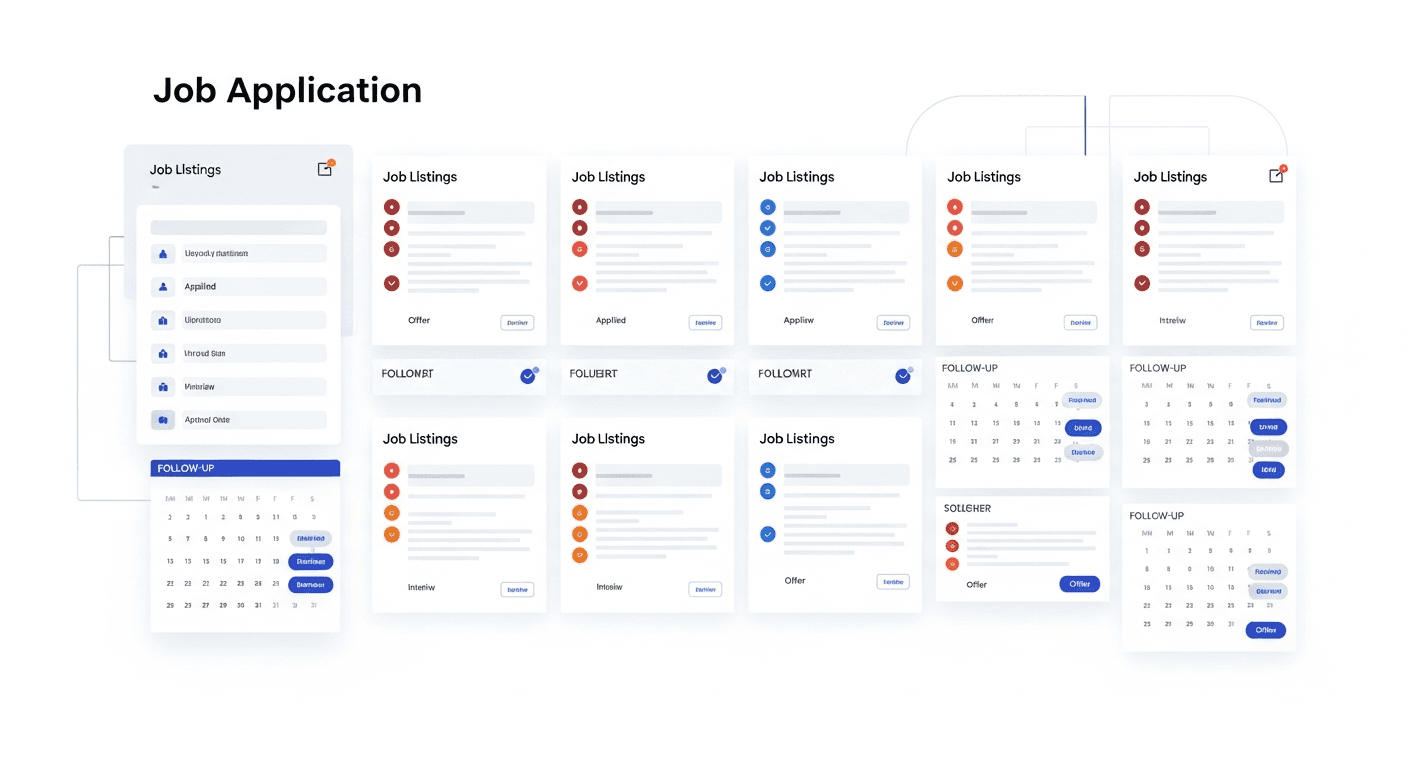
You need a system. It doesn't have to be elaborate, but it has to exist. A basic spreadsheet works; track the company, role, date applied, and status. Add a follow-up column and use it. Most candidates skip follow-ups entirely, which is free interview opportunities left on the table.
A few habits that hold the whole thing together:
Set a weekly review block to check statuses and send follow-ups so nothing slips through the cracks
Keep track of job applications by logging the job description alongside each application so you can prep for interviews without scrambling to find the original posting
Note which resume version you sent, since tailored documents differ from role to role and you'll need to remember what you said
If spreadsheets feel like overkill, Sprout's unified dashboard handles this automatically. Every application gets logged with its status, no manual entry required.
How Sprout Helps You Apply to Multiple Jobs Smarter and Faster
Sprout was built to solve this tension. Apply to more jobs without letting personalization slip.
The swipe-to-apply interface lets you bulk apply to jobs by moving through 100+ roles in a single session, each one going out with a resume tailored to that specific job description's keywords and requirements.
ATS-friendly formatting with standard headers and clean parsing helps make sure that your application is properly parsed by ATS systems and improves the chances it reaches a recruiter instead of getting rejected mid-scan.
Keywords pulled directly from each posting get woven into achievement-based bullets, so the resume mirrors what employers are filtering for and can improve how well your resume aligns with the job description.
The unified dashboard logs every application automatically, so tracking doesn't become a second job.
Over 150,000 job seekers use Sprout, and in October alone, users landed 2,738 interviews at companies like JPMorgan, Nike, and Wells Fargo, personalized applications at scale delivering real outcomes.
FAQs
Can you apply to multiple jobs at once without hurting your chances?
Yes, applying to multiple jobs at once is the standard approach in 2026. With callback rates hovering at just 2-3%, submitting one application at a time means you could wait months for a single interview. The key is tailoring each application to the specific role so quality doesn't slip as volume increases.
How many jobs should you realistically apply to per week?
Between 10 and 20 targeted applications per week hits the sweet spot for most job seekers. This volume gives you enough at-bats to overcome the 2-3% callback rate while leaving room to customize each application, track follow-ups, and manage interview scheduling without losing control.
What happens if you get accepted to multiple jobs at the same time?
You gain real negotiation power and can compare total compensation packages beyond just base salary. Most employers will grant a brief extension if you ask professionally, giving you time to weigh benefits, growth potential, and fit. When declining offers, keep it brief and gracious since recruiters move between companies and a clean exit protects your reputation.
Final Thoughts on Managing Multiple Job Applications
Can you apply to multiple jobs at once? The answer is clear, but execution is what separates results from frustration. The candidates seeing traction today are the ones combining steady volume with tailored applications that reflect each role. Keeping everything organized, following up, and adjusting along the way is what turns effort into offers. Sprout fits into that process by helping you move through high volumes of applications while keeping each one relevant, making it easier to stay consistent and competitive as you scale your search.