


Summary
Entry level marketing jobs pay $36K-$52K to start. Learn about coordinator, social media, and content roles plus how to apply in May 2026.
Breaking into marketing without a ton of experience on your resume is absolutely doable, but it helps to know what you're walking into. Entry-level marketing jobs come in a lot of shapes, pay varies more than you'd think, and the way you apply matters as much as where you apply. This guide covers the role types worth knowing, what employers actually look for, where to find openings, and how to put together applications that get noticed.
TLDR:
Entry-level marketing jobs often include coordinator, social media, content, and analyst roles paying roughly $38,000 to $55,000 to start, depending on location and industry.
Tailor each resume with job-specific keywords to pass applicant tracking systems that scan applications first.
Build a portfolio before you're hired by writing samples or running small campaigns for nonprofits.
Most companies take one to three weeks to respond and often include skills assessments in the interview process.
AI job-application tool generate a tailored resume and cover letter for every role, so each application reflects the specific job and company instead of a generic template that gets filtered out.
What Is an Entry-Level Marketing Job?
Entry level marketing jobs are roles designed for candidates with little to no professional experience in the field. They typically sit at the bottom of a company's marketing org chart, meaning you're expected to learn a lot on the job while contributing to real campaigns and projects.
These roles show up across industries, from startups to large corporations, and can cover a wide range of functions.
Common Types of Entry-Level Marketing Roles
Marketing coordinator: Supports campaign logistics, schedules content, tracks deadlines, and keeps internal teams organized across multiple projects.
Social media assistant: Manages posting schedules, monitors engagement, and helps develop content that fits a brand's voice across channels.
Content marketing associate: Writes blog posts, emails, or web copy and often assists with basic SEO research and editorial calendars.
Email marketing specialist: Builds and sends campaigns, monitors open and click rates, and helps maintain subscriber lists.
Marketing analyst: Pulls reports, interprets performance data, and helps teams understand what's working across paid and organic efforts.
Key Skills and Qualifications Employers Look For in Entry Level Marketing Roles
Employers hiring for entry level marketing jobs tend to look for a mix of hard skills and soft skills. You don't need years of experience, but you do need to show you understand how marketing actually works.

Hard Skills Worth Having
Social media management: knowing how to schedule, post, and read performance data across channels like Instagram, LinkedIn, or TikTok goes a long way.
Basic data literacy: being comfortable in Google Analytics or even Excel shows you can measure what matters.
Content writing: clear, concise writing is one of the most requested skills across nearly every marketing role.
SEO fundamentals: understanding how search works, even at a surface level, is increasingly expected.
Soft Skills That Stand Out
Curiosity and a willingness to learn fast, since marketing tools and trends shift constantly.
Strong communication, both written and verbal, for collaborating across teams.
Organization and attention to detail, especially when managing multiple campaigns or deadlines at once.
Typical Salary Range for Entry Level Marketing Jobs
Starting pay in marketing varies more than you might expect, and a lot depends on the role, location, and industry you land in.
According to the U.S. Bureau of Labor Statistics, the median annual wage for market research analysts and marketing specialists was $76,950 as of May 2024, but entry level positions typically start lower, often in the $38,000 to $52,000 range depending on where you live and what type of company you join.
How Location and Role Affect Starting Pay
Here is a rough breakdown of what entry level marketing salaries can look like across common roles:
Role | Typical Starting Salary |
|---|---|
Marketing Coordinator | $38,000 to $48,000 |
Social Media Coordinator | $36,000 to $46,000 |
Content Marketing Assistant | $40,000 to $50,000 |
Email Marketing Associate | $42,000 to $52,000 |
Major metro areas like New York, San Francisco, and Chicago often push these numbers higher, while smaller markets may come in at the lower end. Agency roles can sometimes offer faster growth in exchange for a leaner starting salary.
Where to Find Entry Level Marketing Job Openings
Finding entry level marketing jobs takes more than a quick Google search. The openings worth applying to are spread across a handful of sources, and knowing where to look saves a lot of wasted time.
Here are the most reliable places to start your search:
Job boards like LinkedIn, Indeed, and Glassdoor are the obvious starting points. Filter by "entry level" and set up alerts so new postings hit your inbox before the rush of applicants arrives.
AI job-search apps like Sprout work differently from traditional boards, they match you to entry-level marketing roles based on your background, then let you apply to several in one session with tailored resumes and cover letters generated for each.
Company career pages often list roles before they syndicate to job boards, so following brands you genuinely want to work for gives you a small but real head start.
Marketing-specific communities on Reddit, Slack groups, and professional associations like the American Marketing Association frequently surface job leads that never make it to mainstream boards.
Your college alumni network is an underused resource. Many grads are willing to refer candidates or flag internal openings, especially when you reach out with something specific to say.
Internship-to-hire pipelines are worth noting too. Many entry level hires come from former interns, so internships at target companies can serve as a direct path in.
How to Make Your Application Stand Out for Entry Level Marketing Roles
Standing out in a pool of entry level marketing applicants takes more than a polished resume. Hiring managers often screen dozens of candidates with similar GPAs and internship backgrounds, so the details matter.
Start with your resume. Tailor it to each role by weaving in keywords from the job description. Many companies use applicant tracking systems that scan for specific terms before a human ever reads a line, so matching your language to the posting can improve your chances of getting seen.
Your cover letter is another opportunity most candidates waste. Skip the generic opener and speak directly to why that company interests you. Reference a recent campaign, a product launch, or something specific about their brand voice.
Build a Portfolio Before You Have a Job
Even without formal experience, you can show your work:
Write sample blog posts or run a small social media account to show content instincts
Volunteer to help a local nonprofit or small business with a real marketing project
Document results wherever possible, even modest ones like follower growth or click rates
How to Apply to Multiple Entry Level Marketing Jobs Without Burning Out
Applying to many jobs at once is the right strategy in a competitive market but only when each application is genuinely tailored to the role. Sending the same materials everywhere is what gets candidates ignored, not the number of applications you send.
There are two ways to keep every application tailored. The manual route: build a master resume and a base cover letter, then spend 10 to 15 minutes per application swapping in job-specific keywords, adjusting your skills section, and referencing the company by name. The AI-assisted route: tools like Sprout generate a tailored resume and cover letter for every role automatically, so each application reflects the specific job and company instead of a one-size-fits-all template.

Staying Organized Without Losing Your Mind
Tracking your applications in a spreadsheet or job search tool helps you avoid duplicates, follow up on time, and spot patterns in what's working.
A simple tracker might include:
The company name and role title so you always know what you applied for
The date you applied and a follow-up reminder so nothing falls through the cracks
Notes on how you tailored each application, helping you refine your approach over time
What to Expect After Applying to Entry Level Marketing Jobs
After submitting applications, the waiting period can feel uncertain. Here is a realistic picture of what the process often looks like for entry level marketing roles.
Most companies take one to three weeks to review applications. If your resume clears initial screening, you may be contacted for a brief phone or video screen lasting around 20 to 30 minutes. This conversation typically covers your background, why you are interested in the role, and basic fit.
From there, stronger candidates often move to a second round with a hiring manager or small team. Some employers include a skills assessment, asking you to draft a short social post, outline a campaign idea, or analyze a mock dataset.
A few things worth knowing going in:
Response rates vary widely. Many applicants never hear back, so tracking your applications and following up after one to two weeks can sometimes improve your odds.
Rejection is normal at this stage. Entry level roles often attract high applicant volume, so each individual outcome reflects limited information about your worth as a candidate.
Interviews reward preparation. Researching the company, reviewing their recent campaigns, and having metrics from any past work ready to share tends to make a real difference.
How Sprout Helps You Land Entry-Level Marketing Jobs Faster
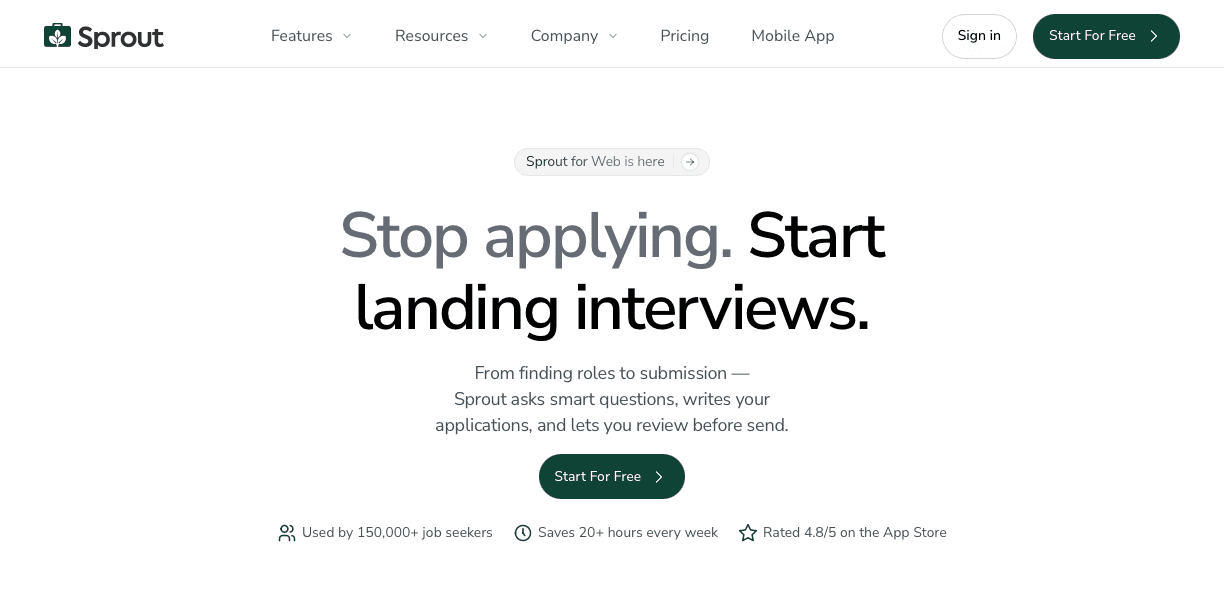
Applying to entry-level marketing jobs means competing against a large pool of candidates who often have similar backgrounds. One of the biggest factors in whether your application gets noticed is how well it matches the specific language in each job description. Sprout's AI automatically identifies top skills and keywords from job descriptions and helps tailor your resume bullets to better reflect them naturally, without keyword stuffing, so your application mirrors exactly what each employer is filtering for in their ATS.
Beyond keyword alignment, Sprout generates a tailored cover letter for every single application. Each one is tailored to the specific company and role instead of relying on the same generic pitch. For entry-level candidates who may not have deep experience to lean on, that personalization can make a real difference in how a hiring manager reads your application.
If you want a faster, more organized way to tackle the application process, Sprout is worth a look. You can apply to multiple roles quickly using a simple swipe interface, track every application in one dashboard, and always know which tailored resume went where. Get started with Sprout and put more personalized applications in front of more hiring managers.
FAQs
What's the best way to find entry level marketing jobs that aren't flooded with applicants?
Check company career pages directly before roles syndicate to major job boards, and tap into marketing-specific Slack groups or alumni networks where openings surface earlier. These channels give you a small head start before the larger applicant pool arrives.
How do I tailor my resume for entry level marketing jobs without professional experience?
Pull keywords directly from each job description and weave them into your resume bullets, then build a portfolio with sample work like blog posts, volunteer campaigns, or a social account you've grown. Document any measurable results, even small ones like follower growth or engagement rates.
Can I stand out for marketing roles without a marketing degree?
Yes. Employers care more about proven skills like content writing, social media fluency, and basic data literacy than your major. Show your work through a portfolio, relevant projects, or internships that prove you understand how marketing actually functions.
Final Thoughts on Landing Entry-Level Marketing Jobs in a Competitive Market
Entry-level marketing jobs take patience to land, but the process gets easier when you know what to focus on. Tailor your applications to each role, build proof of work before you have a title, and stay consistent in how you apply across channels. If you want a smarter way to handle that, Sprout generates tailored resumes and cover letters for every application and keeps everything tracked in one place, so you spend less time formatting and more time getting noticed.