


Summary
Find entry level data analyst jobs in May 2026. Learn required skills, salary ranges, and application strategies to land your first analyst role.
Breaking into data analytics without a long resume is more doable than most people think. Entry-level data analyst jobs are designed for candidates still building their skill sets, and employers are more focused on what you can do with SQL, Python, and a spreadsheet than on years of titles. This guide covers what these roles actually require, what they pay, where to find real openings, and how to put together an application that gets noticed.
TLDR:
Entry-level data analyst jobs require SQL, Python or R, and data visualization skills, not years of experience.
Salaries range from $50,000 to $70,000, with tech hubs and strong portfolios pushing offers higher.
Apply using verified company career pages to avoid expired or fake listings that waste your time.
Tailor your resume with exact keywords from each job description to pass automated screening systems and increase interview callback rates.
Some job search tools like Sprout generate ATS-friendly, tailored resumes for every role using job-specific keywords, which can improve interview callback rates while tracking applications in one dashboard.
What Is an Entry-Level Data Analyst Job?
Entry-level data analyst roles are built for candidates still developing their skills, with most responsibilities carried out under the guidance of senior analysts instead of independently.
The day-to-day work involves collecting data from various sources, cleaning messy datasets by removing errors and duplicates, structuring raw information into usable formats, and running analyses to spot trends or patterns. According to Coursera, entry-level analysts also conduct surveys and interpret results to generate actionable insights for decisions across the business.
Who Actually Qualifies?
There's a common misconception worth clearing up here. Most companies posting entry-level data analyst jobs aren't hunting for five years of experience. They want:
Foundational skills in tools like Excel, SQL, or Python, not mastery of every one of them.
Intellectual curiosity and a willingness to ask the right questions about data.
Someone who can grow into the role over time with proper guidance.
If you're second-guessing whether you qualify, you're probably closer than you think.
Key Skills and Qualifications Employers Look For in Entry-Level Data Analyst Roles

Employers screening entry-level data analyst jobs want to see a mix of technical chops and soft skills. You don't need to be an expert in everything, but hitting the core requirements goes a long way.
Here are the qualifications that show up most consistently in job postings:
SQL proficiency is expected for many roles. You should be comfortable querying databases, joining tables, and pulling clean data sets without hand-holding.
Python or R for data manipulation and basic analysis. Python tends to be more in demand, especially with pandas and NumPy in your toolkit.
Data visualization skills using tools like Tableau, Power BI, or even Excel. Employers want someone who can turn a spreadsheet into a story a non-analyst can follow.
Statistical foundations like understanding distributions, hypothesis testing, and regression. Nothing graduate-level, just enough to interpret results accurately.
Communication skills matter more than most candidates expect. If you can't explain what the data says to a non-technical stakeholder, the analysis loses its value.
A bachelor's degree in statistics, math, computer science, or a related field is commonly requested, though strong portfolios and certifications can offset a less traditional background. Johns Hopkins points out that programming skills and statistical analysis form the foundation for long-term growth in the field.
Skill | What Employers Expect | Priority Level |
|---|---|---|
SQL | Writing queries, joining tables, and pulling clean datasets from relational databases without hand-holding | High - required on most postings |
Python or R | Data manipulation and basic analysis using libraries like pandas and NumPy; Python is more in demand across job postings | High - Python preferred, R acceptable |
Data Visualization | Building clear charts and dashboards in Tableau, Power BI, or Excel that non-analysts can read and act on | High - expected in most roles |
Statistics | Working knowledge of distributions, hypothesis testing, and regression; graduate-level depth is not required | Medium - foundational understanding needed |
Excel | Sorting, filtering, pivot tables, and basic formulas for quick data work and reporting | Medium - often a baseline expectation |
Communication | Translating data findings into plain language for non-technical stakeholders so insights actually drive decisions | Medium - frequently underestimated by applicants |
Typical Salary Range for Entry-Level Data Analyst Jobs
Starting salaries for entry-level data analyst jobs typically fall between $50,000 and $70,000 per year, though this range changes depending on industry, location, and your specific skill set.
Geography plays a big role here. Analysts in tech hubs like San Francisco, Seattle, or New York tend to earn on the higher end, while roles in smaller markets may sit closer to the floor. Remote positions have helped close some of that gap, giving candidates access to higher-paying employers regardless of where they live.
What Affects Your Starting Pay
A few factors can push your offer higher right out of the gate:
Proficiency in SQL, Python, or Tableau signals that you can contribute quickly, which employers reward with stronger offers.
Experience in high-demand industries like finance, healthcare, or tech typically comes with a salary premium compared to non-profit or government roles.
Internship experience or a portfolio of real projects gives you negotiating power that a degree alone does not.
Where to Find Entry-Level Data Analyst Job Openings
Not all job sources are equal. Applying to listings from less reliable sources can sometimes lead to roles that are already filled, duplicated, or outdated. Sourcing from verified postings saves you time and frustration.
Verified Company Career Pages and Aggregators
Going directly to company career pages usually gives you access to the most up-to-date openings. Larger employers like Google, JPMorgan, and Deloitte post analyst roles regularly and update them in real time.
Aggregators that pull from those same verified pages are the next best option, and automated job application tools can help simplify the process. Sprout's job search for data analysts does exactly this, pulling from company career pages and trusted boards daily while filtering out expired and duplicate listings. You're browsing clean data, not ghost jobs. See how it works if you want the full picture.
Niche Job Boards and Network Driven Opportunities
General boards like LinkedIn and Indeed cast a wide net, but niche boards often surface higher-quality entry-level roles with less competition. Sites focused on tech and data roles attract employers who are actively recruiting from that talent pool.
Your network matters here too. Referrals often move faster through hiring pipelines than cold applications, and even a warm introduction from a former classmate or professor can get your resume in front of the right person before a role goes public.
How to Make Your Application Stand Out for Entry-Level Data Analyst Roles
Hiring managers reviewing entry-level data analyst applications aren't spending much time on any single resume. You have seconds to make an impression, so every element needs to work hard.
Start by tailoring your resume to each job. Use the same terminology and skill phrasing found in the posting, since many companies rely on ATS filters before a recruiter reviews applications. Tailoring your wording to each role improves the chances of making it through that first screen.
Your cover letter should do the same. Reference the company by name, mention a specific project or dataset type relevant to their industry, and connect your background directly to their stated needs.
Show Your Work
A portfolio separates you from candidates who only list skills. Include:
A cleaned dataset walkthrough showing how you handled messy real-world data
A visualization project with a clear business question and your interpretation of the findings
Any academic or personal project that produced a concrete, quantifiable result
What to Expect After Applying to Entry-Level Data Analyst Jobs

After submitting, expect silence for one to two weeks. "Application under review" means it's still in the queue, and that's completely normal.
Typical Response Timelines and Screening Steps
ATS filtering happens first, automatically. If your resume clears it, a recruiter reviews it manually before any outreach. Most companies take one to three weeks to respond, sometimes longer at larger employers with high application volumes.
Early Stage Interview Formats
Expect a 30-minute recruiter phone screen, followed by a technical assessment. These usually involve writing SQL queries, walking through a short case study, or analyzing a take-home dataset and presenting your findings.
Tracking Status and Following Up
Following up after one to two weeks is appropriate. The real challenge is remembering where you applied and when. Keeping your applications organized matters, especially when you're applying to multiple roles at once. Many candidates use spreadsheets manually, while tools like Sprout centralize tracking automatically in one dashboard.
How Sprout Can Help You Land an Entry-Level Data Analyst Job
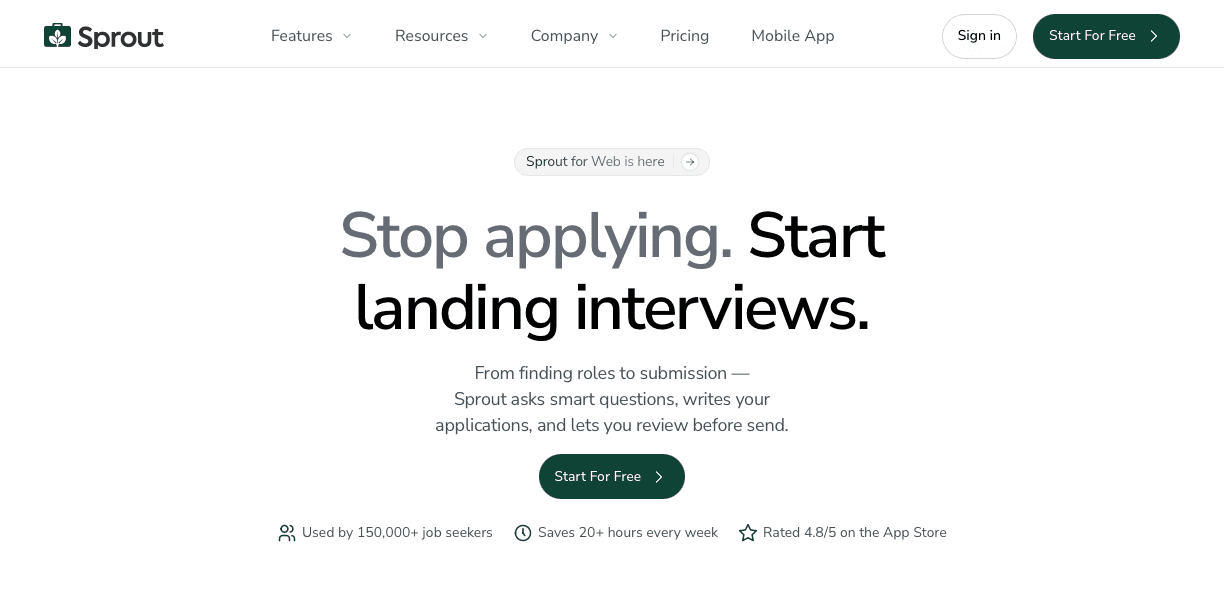
Applying to data analyst roles means dealing with a lot of moving parts at once: tailoring resumes to each posting, tracking where you applied, and making sure your keywords match what ATS filters are scanning for. Sprout handles all of that in one place.
For each job you apply to, Sprout pulls the top skills and keywords directly from that job description and rewrites your resume bullets to mirror the exact language employers are filtering for to best represent your skills and experience. Every application goes out with a resume tailored to that specific role, so you can apply faster without sacrificing relevance or ATS alignment.
Job data is pulled fresh daily from verified company career pages, so you're only applying to real new open roles, not listings that expired two weeks ago. And every application is logged in a single dashboard, so you always know where things stand without maintaining a separate spreadsheet. If you're actively applying and want better results with less manual work, Sprout is worth a look.
FAQs
Can I get an entry-level data analyst job without a computer science degree?
Yes, you can. Most employers care more about foundational skills in SQL, Python, and data visualization than your specific degree, especially if you have a strong portfolio showing real project work. Degrees in statistics, math, or related fields work fine, and certifications combined with solid project examples can offset a non-traditional background.
Entry-level data analyst jobs SQL vs Python: which matters more?
SQL is expected for most roles since you'll be pulling and joining data regularly, while Python is extremely valuable for manipulation and analysis but slightly less universal across all postings. If you're just starting out, focus on getting comfortable with SQL queries first, then add Python with pandas and NumPy to your toolkit.
How long does it take to hear back after applying to entry-level data analyst jobs?
Most companies take one to three weeks to respond after you submit, with larger employers sometimes taking longer due to high application volumes. Following up after seven to ten business days is appropriate if you haven't heard anything, but expect initial silence as your application moves through ATS filtering before a recruiter reviews it manually.
Final Thoughts on Landing Your First Entry-Level Data Analyst Job
Getting your first entry-level data analyst job comes down to having the right skills, finding real openings, and putting together applications that speak the same language as the job description. If you're juggling multiple applications at once and want a faster way to keep everything tailored and organized, Sprout is worth a look. It pulls verified job listings daily, generates resumes with keywords matched directly to each posting, and tracks every application in one place, so you spend less time on logistics and more time preparing for the interviews that come in.