

Summary
Learn how to get a project manager job fast in May 2026 with tailored resumes, smart applications, and proven tactics that speed up your PM job search.
If you've been asking yourself "how do I get a project manager job fast," you're not alone. The PM job market moves quickly, and the difference between a two-week search and a two-month one often comes down to a few decisions made early on: how you position your resume, which roles you target, and how you show up once a company responds. This guide breaks down what actually works so you can stop guessing and start moving.
TLDR:
Apply to 15-25 tailored PM jobs weekly to balance speed with relevance and improve callback rates.
Mirror exact job posting language in your resume to pass ATS filters that scan for specific terms.
Reply to recruiter messages within 24 hours and follow up 24 hours post-interview to compress timelines.
Apply within the first few days of a posting going live, as early applicants tend to get reviewed more carefully before inboxes fill up.
Tools like Sprout tailor your resume to each PM role using job-specific keywords and track all applications in one dashboard.
What It Actually Takes to Get a Project Manager Job Quickly
Getting a project manager job fast comes down to a few things working together: a resume that speaks directly to each role, a job search that targets the right openings, and enough interview prep to back it all up.
Speed without strategy tends to backfire. Sending out 50 generic applications rarely works as well as sending tailored applications at scale. The advantage comes from relevance, not lower volume. Hiring managers can tell when a resume was written for any job versus their job, and that distinction often decides who gets a callback.
Here is what tends to separate job seekers who land roles quickly from those who spend months spinning their wheels:
Tailoring your resume to each posting using the specific language and responsibilities listed. Doing this manually works, but tools like Sprout automate the process so you can personalize applications without slowing down.
Focusing your search on roles that match your actual experience level, so you are competitive from the start.
Treating your LinkedIn profile as an active part of your application, since many recruiters source candidates directly from there.
Preparing concrete examples of past projects before interviews, not during.
What Hiring Teams Look for in Project Manager Candidates
Hiring teams scanning PM resumes are typically looking for methodology fluency, ownership language, and proof you can manage scope, timelines, and people at once.

On the hard skills side, this usually means:
Agile, Waterfall, or Hybrid methodology experience across different team sizes and industries
Full project lifecycle knowledge spanning initiation, planning, execution, monitoring, and closure
Risk assessment, stakeholder management, and budget tracking
Tool proficiency in software like Jira, Asana, MS Project, or Confluence
Soft skills matter too, but what gets you past the first filter is the language on your resume. Applicant tracking systems parse resumes for relevant skills, experience, formatting, and job-related keywords. Missing important terms from the job description can make your resume less visible or less clearly matched, but ATS tools do not all automatically reject candidates based on a few missing exact phrases.
Matching the Job Description Vocabulary
The fix is straightforward: mirror the wording from the job posting directly in your resume. If the posting says "stakeholder alignment," use that phrase instead of a synonym. This habit can improve how clearly your resume matches the role and improve the chances it surfaces to a recruiter for review.
How to Make Your Project Manager Applications Stand Out at Scale
Applying broadly only works when your applications still feel tailored to each role. The challenge is maintaining relevance at scale, which is where AI-assisted tailoring tools help. Hiring managers can spot a generic resume, and many applicants lose ground because they favor volume over fit.
The goal is to move fast without cutting corners on relevance. A few habits make this easier:
Tailor your resume summary and skills section to mirror the language in each job posting. Project management roles often differ in scope, methodology, and tooling, so a resume written for a construction PM should read differently than one targeting a software PM role.
Write a cover letter that references something specific about the company or team. One genuine sentence about why the role fits your background can outperform a fully polished but generic letter.
Track what you send and where. Knowing which version of your resume went to which company helps you follow up intelligently and spot patterns in what gets responses.
Apply within the first few days of a posting going live. Many recruiters begin reviewing applications as they arrive, so getting in early means your resume gets looked at before the pool grows and attention gets spread thin.
Speed matters, but a well-matched application to ten roles will typically produce better results than a copy-paste approach to fifty.
How Fast You Can Realistically Expect Interviews for Project Manager Roles
Realistic timelines vary more than most job seekers expect, and they shift based on company size, seniority, and the volume of applicants a role attracts. Available data suggests hiring processes often take four to six weeks across industries, though this can extend substantially for specialized or senior roles.
Startups and growing companies can move from application to first interview in one to two weeks. Large enterprises with layered HR processes often take three to six weeks just to schedule an initial screening call, sometimes longer, and there are several reasons hiring takes longer at bigger organizations.
Seniority plays a role too. Entry-level PM roles attract high applicant volume, which slows initial review times. Senior and director-level roles involve longer loops, sometimes four to six rounds spread over several weeks.
What You Can Actually Control
You won't speed up a slow HR team, but you can stop being the bottleneck on your end:
Reply to recruiter outreach quickly, ideally within 24 hours, since delayed responses can cause hiring managers to move on to other candidates.
Have concrete project examples prepared before you apply, so you're never scrambling when an interview lands on short notice.
Follow up within 24 hours of each interview to stay top of mind without being overbearing.
Those habits tend to compress timelines regardless of how slowly a company moves internally.
Job Search Strategy | Callback Rate | Time to First Interview | Weekly Application Volume | Best For |
|---|---|---|---|---|
Generic resume sent to many roles | 2-5% response rate | 4-6 weeks or longer | 50+ applications | High volume with low targeting needs |
Manual tailoring per job posting | 10-15% response rate | 1-3 weeks | 15-25 applications | Job seekers with time to customize each application |
AI-assisted resume tailoring | 20-40% response rate | 1-2 weeks | 40-60 applications | Balancing speed with personalization at scale |
Recruiter outreach only | 30-40% response rate | 1-2 weeks | 5-10 conversations | Senior roles or niche specializations |
Internal referrals | 40-60% response rate | 1-2 weeks | 3-8 applications | Candidates with strong professional networks |
The Biggest Time Drains in the Project Manager Job Search (and How to Cut Them)
Most job seekers burn time in the same places without realizing it. Knowing where the slowdowns happen helps you cut them out.

Searching for openings eats up hours every week. Jumping between LinkedIn, Indeed, and company career pages to find fresh postings is repetitive and inconsistent. Some tools aggregate listings in one place, which can save a meaningful chunk of time here.
Writing application materials from scratch is another major time drain. A generic resume sent to ten jobs will almost always underperform a tailored one sent to five. The fix is building a strong base resume and cover letter, then adjusting the keywords and framing for each specific role instead of rewriting everything or copy-pasting the same version.
Tracking your applications and follow-ups is easy to let slip. A simple spreadsheet works fine. The point is having a system so nothing falls through the cracks and you can follow up at the right time.
How Sprout Helps You Land a Project Manager Job Faster
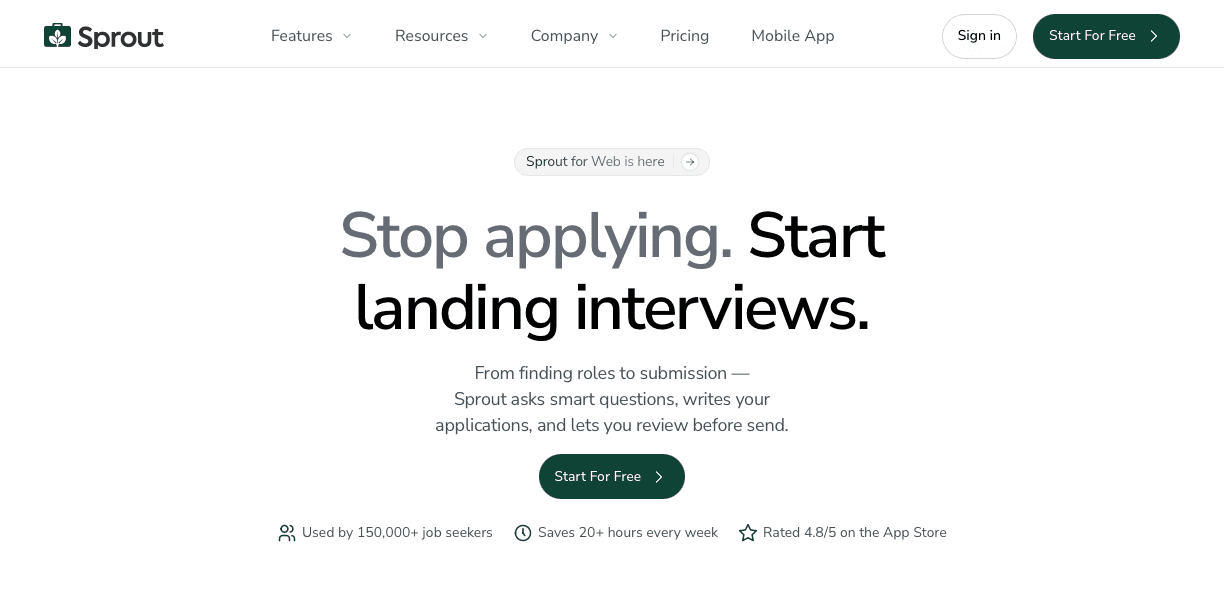
Sprout is built especially for job seekers who want to move fast without sacrificing quality. Instead of blasting out generic applications, Sprout helps you tailor your resume and cover letter to each specific role, pulling in the exact keywords and requirements from the job posting so your materials speak directly to what that employer is looking for.
Every job listing on Sprout is verified, so you're spending your time on real opportunities instead of chasing postings that have already been filled or taken down. The resume builder follows ATS-friendly formatting standards, using clean structure and standard headers that improve the chances your application gets properly parsed before a recruiter ever sees it.
Sprout also tracks your applications in one place, so you always know what you've sent, what's pending, and where to follow up. If you want a faster, more organized way to run your project manager job search, Sprout is a strong place to start.
FAQs
How do I get a project manager job fast without spamming applications?
Focus on sending 15-25 tailored applications per week instead of 50 generic ones. Customize your resume and cover letter to mirror the exact language from each job posting (including specific methodologies, tools, and competencies listed) so your materials speak directly to what that employer needs.
Project manager resume best practices vs. cover letter, which matters more?
Both matter, but your resume is what gets you past ATS filters first. Use exact keywords from the job description (like "Agile," "stakeholder alignment," or "risk mitigation") in your resume to improve parsing and ranking. Cover letters add value at mid-to-senior levels by showing you've researched the specific role and company.
What is ATS-friendly formatting for project manager resumes?
ATS-friendly formatting uses standard section headers like "Work Experience" and "Skills," avoids tables or multi-column layouts that break parsing, and sticks to simple fonts with clean spacing. This lets applicant tracking systems extract your information correctly instead of scrambling your resume before a recruiter sees it.
How long does it take to hear back from project manager applications?
Startups and smaller companies often respond within one to two weeks, while large enterprises with layered HR processes can take three to six weeks just for an initial screening call. You can speed things up on your end by responding to recruiter outreach within a few hours and following up within 24 hours after each interview.
Final Thoughts on How to Get a Project Manager Job Fast
If you keep asking yourself, "how do I get a project manager job fast," the honest answer is that speed comes from doing the basics well: a resume tailored to each role, a search focused on the right openings, and responses that show up before the hiring team moves on. None of it requires a perfect playbook, just consistent habits applied early. If you want a tool that handles the tailoring and tracking side so you can focus on the conversations, Sprout is worth a look.