

Summary
Sonara AI review covering pricing, automation features, user feedback, and better alternatives for job seekers in May 2026. See how it compares to Sprout.
If you're considering Sonara alternatives, it's probably because you've heard about the automation but you're not sure if sending identical resumes to dozens of jobs is the right move for your search. The appeal is obvious: less time filling out forms, more applications submitted. The downside is less obvious until you realize hiring managers are seeing the exact same resume whether the role is entry-level or senior, technical or creative. Here's what you need to know about Sonara's pricing, how the tool works, what users are saying, and where other options might fit your search better.
TLDR:
Sonara automates job applications, but third-party reviews suggest resume tailoring may be limited compared with tools built around per-job customization.
Users report 25-40% application failure rates and job matching issues.
Pricing is $24/month.
Sprout tailors resumes per job posting with job-specific keywords and verified listings.
For focused or competitive searches, a tailored approach tends to produce better interview results.
What Sonara AI Is and How It Works
Sonara AI is a job search automation tool built to remove the manual grind from applying. Upload your resume, set your preferences, and let the AI scan listings and submit applications for you. That's the core pitch.

The workflow starts with profile setup. You provide your existing resume, then answer questions about target roles, location, and salary range. Sonara's matching algorithm takes it from there, identifying relevant openings and submitting applications automatically by pulling your profile details into each form.
A tracking dashboard shows where applications have gone and their current status. The idea is that you spend less time on job boards and more time elsewhere.
What the Automation Actually Covers
It's worth being clear about what Sonara does and does not do in practice. The tool handles volume, scanning listings and filling out application forms on your behalf. Public information does not clearly show the same level of per-role resume and cover-letter tailoring offered by tools built especially around job-by-job customization. Applications appear to rely heavily on the profile you upload at setup, which means the content a hiring manager sees is largely identical across every submission. For job seekers who rely on tailoring resumes to job descriptions, that's a meaningful gap to understand before signing up. Tools built around automatic resume tailoring, like Sprout, approach the process differently by adapting resumes to each posting automatically instead of relying on a single static profile. Available data suggests that most companies use automated screening systems that parse resumes for role-specific keywords, making generic applications less likely to rank well.
Sonara AI Features
Sonara's feature set is built around one goal: keeping you out of the manual application loop as much as possible. Here's what that includes:
AI job matching scans millions of listings and filters them against your role preferences, location, and salary range to surface relevant openings.
Daily job digest delivers a curated set of matches each morning so you're not combing boards manually.
Automated form-filling pulls your stored profile details and submits applications across supported job boards on your behalf.
Application dashboard logs every submission with current status, giving you a single view of where things stand.
User oversight is intentionally light. You set your criteria upfront, and Sonara handles the rest in the background. There's no built-in per-application review step by default, so you're trusting the matching logic to get the targeting right.
Sonara AI Pricing
Sonara runs on two pricing paths: a short-term trial and an annual commitment.
Plan | Price | Billing |
|---|---|---|
Trial | $2.95 | 14-day intro, then $23.95 every 4 weeks |
Annual | $5.95/month | $71.40 billed upfront |
Both tiers include the same core automation: job matching, daily digest, automated form-filling, and the application dashboard.
The billing math is worth knowing before you commit. Staying on the rolling cycle after the trial puts you at roughly $310/year. The annual plan at $71.40 upfront is considerably cheaper, though the full amount is due on day one.
Worth noting: the trial auto-renews without a reminder. That 14-day window moves quickly, so if you decide Sonara is not the right fit, canceling before the renewal date is something to stay on top of.
What Users Are Saying About Sonara AI
Sonara holds a 4.1/5 on Trustpilot, with positive reviews pointing to a common theme: it saves time. Setup is simple, the hands-off experience is genuinely appreciated, and some users do report landing interviews through it.
Product Hunt feedback leans more critical. Users there flag a noticeable failure rate on submitted applications, with forms erroring out or routing to roles that didn't match their stated preferences. Poor job matching and slow customer support show up as recurring complaints, especially when billing or application errors need fast resolution.
The divide is not entirely surprising for a background-automation tool. Results seem to vary depending on how well your initial profile is configured and which job boards Sonara targets against your criteria.
Sonara AI Pros and Cons
Sonara does a few things well, and a few things that will frustrate you. Here's the honest breakdown:

Pros:
Minimal setup time to get running, so you can have applications going out within a short window of signing up.
Applies in the background while you focus elsewhere, which frees up time during an otherwise exhausting job search.
High application volume without manual effort, though raw volume alone often matters less than targeted applications with proper tailoring.
Continuous job discovery through daily digests, so you're not relying solely on your own search habits.
Cons:
Application failure rates reported between 25-40%, meaning a notable share of submissions may never actually go through.
No resume or cover letter tailoring per role, so every application reads identically regardless of the job or company.
Job matching can miss the mark, routing applications to roles outside your stated preferences.
Paid-only access with an auto-renewing trial that requires active cancellation to avoid being charged.
The core tension here is volume versus quality. Sonara is genuinely useful if raw application count is your priority and you're comfortable with a hands-off approach. If you care about each application reflecting the specific role and company, the generic output is a real drawback worth weighing carefully.
Is Sonara AI Worth It
Sonara fits a narrow use case well: passive job seekers who want background coverage without daily effort.
For anyone running a focused search, though, the generic application output becomes a real liability. Research indicates that tailoring resumes can substantially improve interview rates, which is why tools focused on automated resume customization have gained traction. If Sonara's matching logic doesn't align closely with the roles you're actually targeting, you're spending money to send applications that may never gain traction.
The verdict depends almost entirely on how active your search is. Passive and patient? Sonara can work. Focused, competitive, or making a career pivot? The lack of personalization may cost you more than the subscription saves.
Best Sonara AI Alternatives
If Sonara's limitations have you looking elsewhere, there are a few solid options worth knowing about.
Sprout
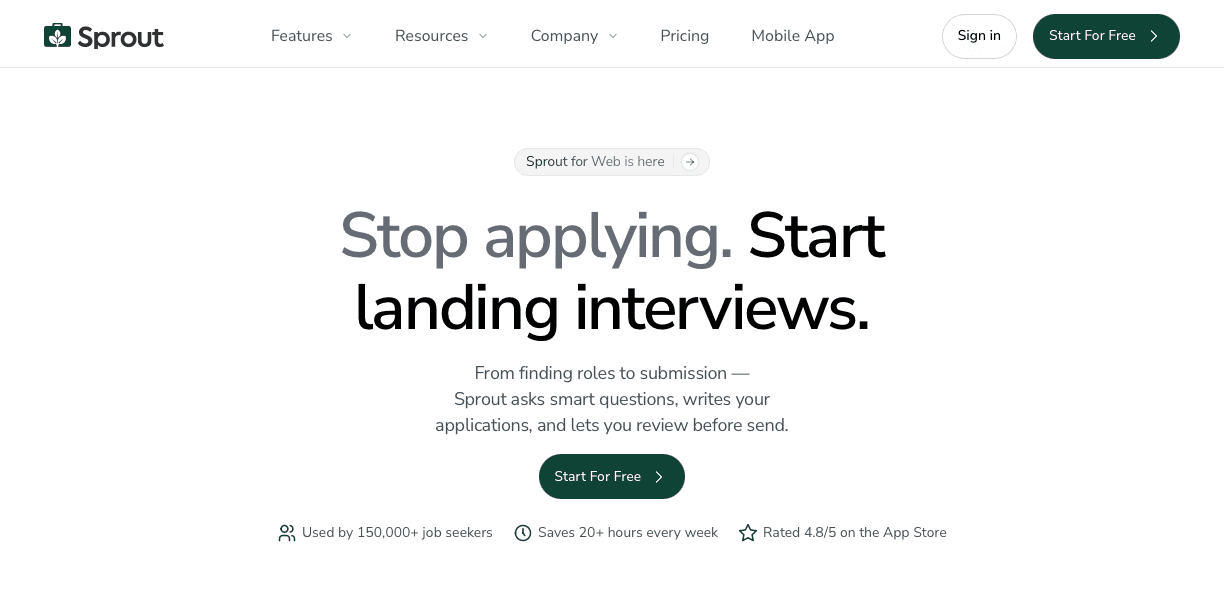
Sprout is a job search tool that pairs AI-driven job matching with resume tailoring built around each specific job posting. Instead of blasting out applications, Sprout pulls verified, real-time job listings and helps you customize your resume with the keywords and details that matter for that exact role. The goal is fewer, better applications that actually get parsed correctly and reach a recruiter. If you want a more targeted approach to your search, Sprout is a strong place to start at usesprout.com.
Teal
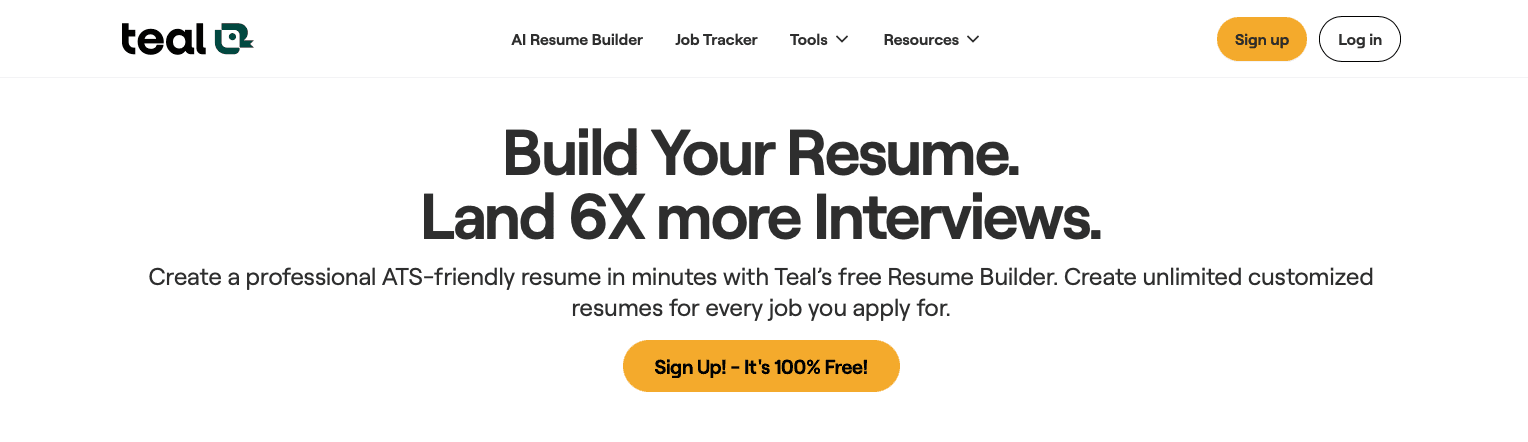
Teal is a free job search organizer with resume-building features. It works well for tracking applications and building ATS-friendly resumes manually, but the automation side is more limited compared to dedicated AI tools.
Kickresume
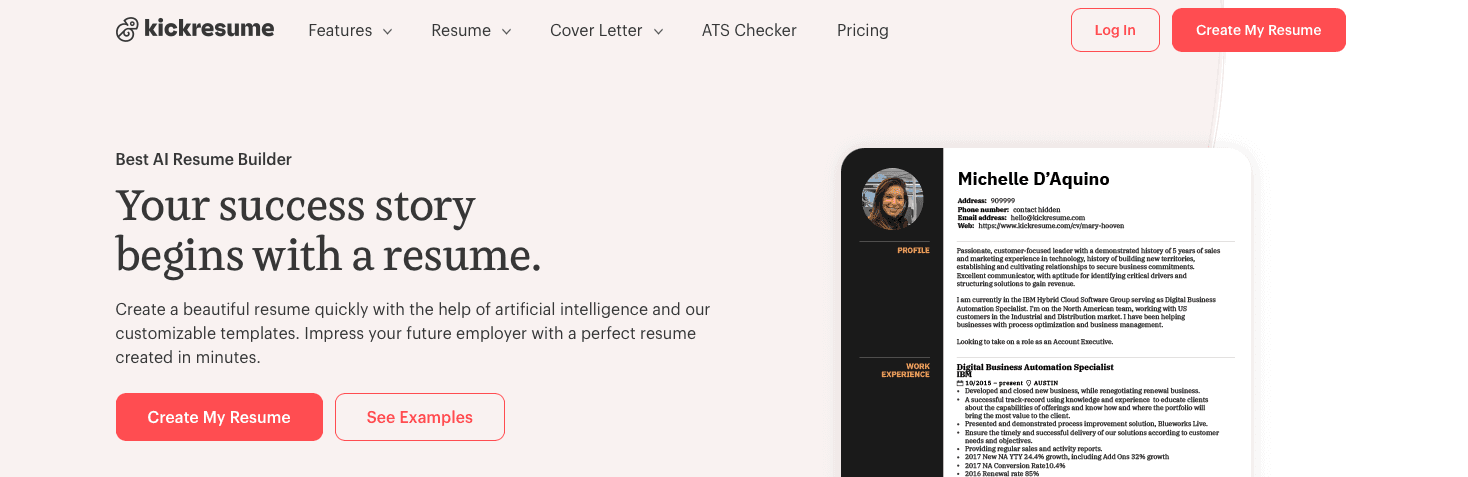
Kickresume focuses on resume and cover letter creation with AI assistance. It is a good pick if resume quality is your main concern, though it offers less help with the actual job-matching and application workflow.
How Sprout Compares to Sonara for Job Application Automation
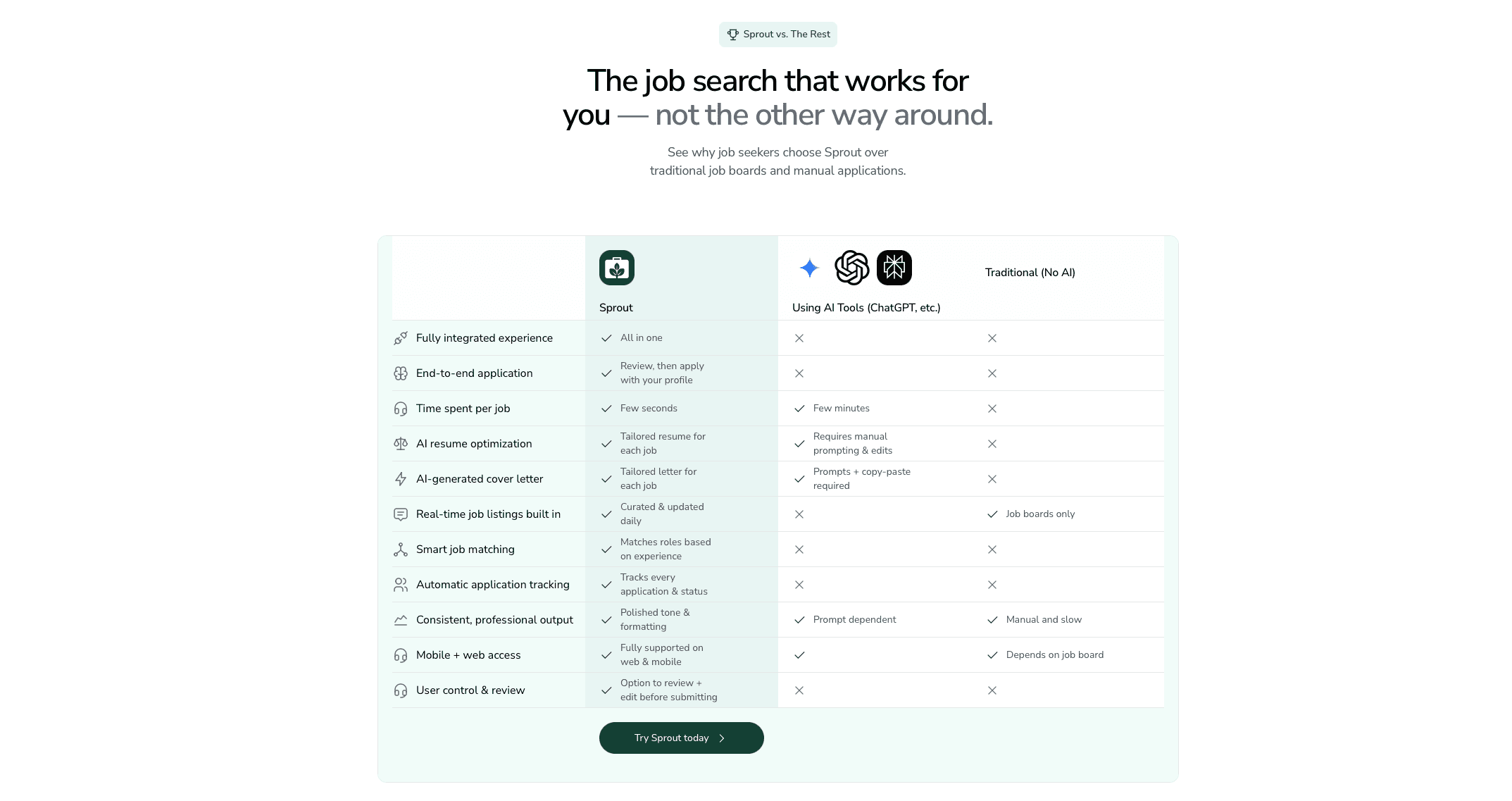
Sonara automates job applications by scanning listings and submitting on your behalf, which sounds appealing on paper. The catch is that it sends the same resume to dozens of jobs without tailoring it to each role, which can hurt your chances more than help them.
Sprout takes a different approach. Instead of blasting out applications, it builds a customized resume and cover letter for each job you apply to, pulling in the specific keywords, requirements, and language from that job posting. Every application reflects the actual role, not a generic version of you.
Here is how the two stack up on the things that matter most to job seekers:
Feature | Sonara | Sprout |
|---|---|---|
Resume tailoring | One resume for all jobs | Tailored per job posting |
Cover letters | Not included | Custom per application |
Application volume focus | High volume automation | Quality-first applications |
Job sourcing | Aggregated listings | Verified, real-time postings |
ATS-friendly formatting | Not specified | Standard headers, clean parsing |
If getting more interviews is the goal, volume without personalization may be less effective for competitive or specialized roles. Sprout is a strong option if you want each application to actually reflect the role you are going for.
FAQs
Sonara AI vs. Sprout for job applications?
Sonara submits the same resume to every job without tailoring, while Sprout builds a custom resume and cover letter for each role based on that specific job posting. If you want applications that reflect the actual position you're applying for, Sprout gives you better odds of landing interviews.
Does Sonara tailor resumes for each job?
No. Sonara uses the same resume profile you uploaded at setup for every application it submits. If you need resumes customized with job-specific keywords and requirements, tools like Sprout automate that process by tailoring each application to the specific role automatically.
How much does Sonara AI cost per year?
Sonara costs $71.40 per year on the annual plan, or roughly $310 per year if you stay on the rolling 4-week billing cycle after the $2.95 trial ends. The annual plan is billed upfront and saves you about $240 compared to the rolling cycle.
Can I try Sonara AI before paying full price?
Yes. Sonara offers a 14-day trial for $2.95, but it auto-renews to $23.95 every 4 weeks after that without a reminder. If you decide it's not the right fit, cancel before the trial ends to avoid the renewal charge.
What's the biggest weakness of Sonara AI?
The biggest weakness is the lack of resume personalization per job, combined with application failure rates between 25-40% reported by users. You're paying for volume, but many submissions may never go through or may not match the roles you actually want.
Final Thoughts on Choosing the Right Job Search Approach
Sonara fits a specific niche for passive job seekers who want automation without much oversight. When you need applications that actually reflect each role you're targeting, reviewing Sonara alternatives like Sprout makes sense since they build tailored resumes with job-specific keywords and clean ATS formatting. Your results will vary based on how much personalization matters in your field. If you want applications that speak directly to each role, start with Sprout and see the difference tailored content makes.