


Summary
Find entry level business analyst jobs in May 2026. Learn salary rates, required skills, and where to find openings that match your background.
Landing an entry level business analyst job takes more than sending out a stack of applications and waiting to hear back. The role calls for a specific mix of data fluency, process thinking, and communication skills, and hiring managers tend to know exactly what they want. Whether you're a recent graduate or making a career switch, this guide covers what the role involves, what employers look for, what the pay looks like, and how to put together applications that actually move forward.
TLDR:
Entry level business analyst jobs blend data analysis, process mapping, and stakeholder communication.
Starting salaries range $50,000-$75,000, varying by industry, location, and educational background.
Tailor each resume to mirror exact job posting language instead of sending generic applications.
Focus on tailored applications that mirror each job's specific requirements instead of sending high volumes of generic submissions.
Sprout can generate ATS-optimized, role-specific resumes and cover letters for every application automatically.
What Is an Entry Level Business Analyst Job?
Entry level business analyst jobs sit at the intersection of data, business process, and communication. You're brought in to help an organization understand what's working, what's not, and what changes might improve performance or reduce cost.
In practice, that means gathering requirements from stakeholders, documenting workflows, analyzing data sets, and presenting findings to decision-makers. You're not expected to arrive with years of experience, but you are expected to think clearly, ask the right questions, and translate messy information into something actionable.
What You'll Typically Be Responsible For
Most entry level roles share a similar foundation, even across different industries:
Gathering and documenting business requirements by interviewing stakeholders and observing existing workflows
Analyzing data using tools like Excel, SQL, or Tableau to spot trends or inefficiencies
Creating process maps, reports, or presentations that summarize findings for non-technical audiences
Supporting project managers or senior analysts on larger initiatives
The role rewards curiosity and structured thinking more than any single technical skill.
Key Skills and Qualifications Employers Look For in Entry Level Business Analyst Roles
Most entry level business analyst job postings share a consistent set of expectations, even when the industry or company size varies. Knowing what employers typically look for helps you focus your preparation on the areas that actually move the needle.

Technical Skills
Employers generally want candidates who are comfortable working with data. This tends to include proficiency in Excel or Google Sheets, basic SQL for querying databases, and familiarity with tools like Tableau or Power BI for reporting. Some roles also list experience with project management software such as Jira or Confluence.
Soft Skills
Analytical thinking and clear communication are two of the most consistently requested qualities. Business analysts act as a bridge between technical teams and business stakeholders, so the ability to translate complex findings into plain language carries real weight.
Commonly Listed Qualifications
A bachelor's degree in business, finance, information systems, or a related field
Experience with requirements gathering or process documentation, even from internships or coursework
Familiarity with Agile or Scrum methodologies, which many teams now follow as a default
Skill Type | Example | Why It Matters |
|---|---|---|
Technical | Excel, SQL, Tableau | Used daily to query, clean, and present data |
Communication | Stakeholder interviews, written reports | Bridges the gap between technical and business teams |
Process | Requirements gathering, workflow mapping | Turns messy operations into documented, actionable steps |
Methodology | Agile, Scrum | Most teams run on iterative delivery cycles |
Typical Salary Range for Entry Level Business Analyst Jobs
Starting salaries for entry level business analyst jobs vary based on location, industry, and company size, but available reports suggest the range tends to fall between $50,000 and $75,000 per year in the United States.

What Influences Your Starting Pay
A few factors tend to move the needle on where you land within that range:
Industry matters more than many candidates expect. Finance and tech sectors often pay on the higher end, while nonprofits and government roles can sit closer to the floor.
Geographic location plays a real role. Major metro areas like San Francisco, New York, and Seattle typically offer higher base salaries to offset cost of living.
Educational background and certifications can shift offers upward, particularly if you hold a degree in data analytics, finance, or information systems.
Internship experience often signals practical readiness to employers and may strengthen a candidate's negotiating position during the hiring process.
Where to Find Entry Level Business Analyst Job Openings
Not all listings are created equal, and where you search directly shapes what you find.
Best Job Discovery Channels
Company career pages offer the most accurate, current openings since postings come straight from the source with no lag or third-party filtering involved.
Niche boards focused on analytics and data roles tend to surface better-matched positions than broad aggregators that mix in unrelated listings.
LinkedIn is widely used, but expect duplicate listings and some stale postings mixed in among the fresh ones.
University alumni networks and professional associations like IIBA can surface roles that never get broadly listed publicly.
Why Job Quality Matters
Applying to expired or duplicate listings skews your response rate and wastes real time you could spend on stronger opportunities. A focused search across fewer, higher-quality sources tends to produce better interview rates than blasting applications across every board available. Some job search tools pull verified, real-time postings so you spend less time filtering out dead ends and more time applying to roles that are actually open.
How to Make Your Application Stand Out for Entry Level Business Analyst Roles
Standing out for entry level business analyst jobs comes down to a few things done well. Hiring managers often see dozens of applications for the same role, so the details matter more than you might expect.
Start with your resume. Tailor it to each job posting by mirroring the language used in the description. If a posting mentions "stakeholder communication" or "process documentation," those exact phrases should appear in your resume where relevant. Generic resumes tend to get overlooked.
Certifications That Help Early On
A few credentials can add real weight to an entry level application:
The ECBA from IIBA signals foundational knowledge and commitment to the field, even without years of experience behind it.
A Google Data Analytics Certificate shows comfort with data tools, which many BA roles require from day one.
Microsoft Excel or SQL certifications are practical proof that you can handle the technical side of the job.
Cover letters also matter here. A short, focused letter that connects your academic or internship background directly to the company's work tends to land better than a generic one.
How to Apply to Multiple Entry Level Business Analyst Jobs Without Burning Out
Applying to dozens of roles can work when each application is relevant to the position. Many candidates either tailor applications manually or use tools that automatically tailore resumes for each application. The key is building a repeatable system that keeps applications tailored without creating hours of additional work. Some candidates do this manually, while others use automation to generate role-specific resumes and cover letters for every application.
Focus on submitting tailored applications that match each role's requirements
Track everything in one place
Batch your research time
What to Expect After Applying to Entry Level Business Analyst Jobs
Most companies take one to three weeks to review applications, with initial screens happening over phone or video. Automated confirmation emails confirm submission but say nothing about actual review status. Silence after four weeks often means the role moved on, though many organizations skip formal rejections entirely.
What Early Screening Looks Like
First rounds tend to be behavioral. Recruiters check communication and culture fit before any technical depth, so basic Excel or SQL assessments often come shortly after. Preparing for common screening questions helps you avoid being caught off guard.
Keeping Track So Nothing Slips
Knowing when you applied, which resume version you sent, and where each role stands makes following up on job applications more targeted and less stressful. A centralized tracker keeps every opportunity in view so follow-ups happen at the right moment, not after you have already forgotten you applied.
How Sprout Can Help With Your Entry Level Business Analyst Job Search
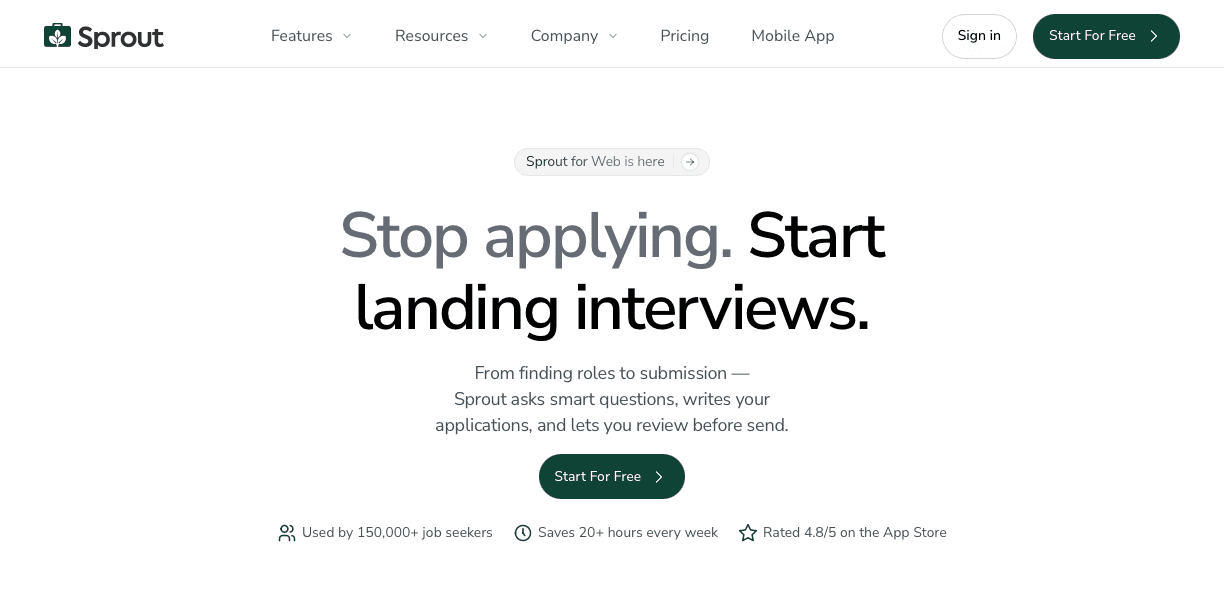
Landing an entry level business analyst job means standing out in a competitive applicant pool, and one of the most common mistakes candidates make is submitting the same resume to every role. Sprout is an AI-powered job search platform that generates a tailored resume and cover letter for each individual application, pulling the job requirements and priorities directly from the job description so your submission mirrors what the hiring team is actually looking for. Every document uses a clean, ATS-friendly format with standard section headers and consistent structure, which may help applicant tracking systems parse application information more effectively.
Beyond the documents, Sprout pulls verified job listings from company career pages and trusted boards, refreshed daily, so the roles you apply to are real and currently open. A built-in tracking dashboard keeps every application organized in one place, with status, follow-up dates, and resume version logged for each submission. For anyone managing multiple applications at once, having that clarity makes the difference between a focused, intentional search and a chaotic one.
If you want a faster, more organized way to pursue entry level business analyst jobs without sacrificing the quality of each application, Sprout is worth a look.
FAQs
Entry level business analyst vs data analyst: what's the difference?
Business analysts focus on documenting workflows, gathering requirements from stakeholders, and recommending process improvements, while data analysts spend more time building models and running statistical analyses. If you prefer working directly with people and translating business needs, BA roles fit better.
How much do entry level business analyst jobs pay?
Starting salaries typically range from $50,000 to $75,000 per year in the United States. Finance and tech sectors pay toward the higher end, while location, your degree focus, and internship experience can shift your offer by several thousand dollars.
Can I apply to business analyst jobs without burning out?
Yes, if you focus on personalization over volume. Tailored applications generally perform better than one-size-fits-all submissions because they better reflect the requirements of each role. You can customize applications manually or use tools that automatically generate role-specific resumes and cover letters to maintain personalization across a larger number of applications.
Final Thoughts on Landing an Entry Level Business Analyst Job
Breaking into an entry level business analyst job takes a focused, intentional approach. The candidates who move forward fastest are the ones who tailor every application to the role, track their submissions consistently, and invest time in the right skills before they apply. It's a competitive field, but the bar for standing out is often lower than it looks. Most applicants send generic materials, which means a well-matched resume and a specific cover letter already put you ahead. Sprout is built for exactly this kind of search: it generates tailored resumes and cover letters for each role, pulls verified job listings daily, and keeps everything organized in one place. If you're ready to run a smarter entry level business analyst job search, Sprout is a good place to start.