


Summary
Find the best AI job application tools in May 2026. Compare auto-apply features, resume tailoring, ATS optimization, and tracking to speed up your job search.
Most job searches start organized and turn messy once applications pile up. You're tweaking resumes for each role, copying and pasting into forms, and losing track of what you sent where. The best AI job application tools cut that friction by automating the parts that drain your time: scanning job descriptions for keywords you're missing, filling out forms across job boards, and tracking every submission in one place.
TLDR:
AI job application tools automate form-filling, tailor resumes to job postings, and track where you applied.
Tools that send identical resumes at high volume have less probability of getting an interview than tailored applications.
Speed-focused tools save time but may sacrifice job-specific customization.
Sprout flags missing keywords per job posting and tracks every application in one workflow, free to start.
Keeping all applications in one place reduces the risk of missing follow-ups or applying to the same role twice.
What Are AI Job Application Tools?
AI job application tools automate the most time-consuming parts of job searching: filling out application forms, generating resumes and cover letters tailored to each role, and tracking where you've applied.
What makes these tools useful for many job seekers is a volume problem. Job boards have multiplied, remote roles have widened the competitive pool, and a single listing can attract hundreds of applicants within hours. The job search landscape has shifted toward AI-driven screening and keyword-based hiring, which means applying one by one rarely keeps pace. These tools exist to bring the odds back toward the applicant.
How We Ranked AI Job Application Tools
This comparison reviews tools across job boards, resume builders, and full-cycle application suites. Here's what we weighted most heavily.

Depth of AI assistance: Some tools scan a job description and spit out a generic resume tweak. Others cross-reference the posting against your existing resume, flag missing keywords, and suggest where to work them in. The gap between those two experiences is wide, and we scored tools on where they fell on that range.
Real cost vs. stated cost: Free tiers that lock every useful feature behind a paywall are common in this space. We looked at what you actually get without paying, what the paid tiers run monthly or annually, and whether the price reflects the output quality.
Application volume and personalization balance: Tools that fire off hundreds of identical applications score poorly here. We favored tools that pair speed with some form of job-specific tailoring, because volume without fit rarely moves the needle on interview rates.
Ease of use and setup time: If onboarding takes an hour and requires uploading a dozen documents before you can apply to a single job, that friction matters. We factored in how quickly a new user can go from sign-up to submitted application.
Tracking and visibility: A good AI job application tool should give you a clear view of where every application stands, beyond just helping you send them.
Tool | Best For | Key Tradeoff |
|---|---|---|
Sprout | Tailoring + tracking | Free to start |
JobCopilot | Volume at scale | No per-job tailoring |
JobHire.AI | Fast setup, high throughput | No customization |
Sonara | Broad early-search coverage | Fixed profile only |
Simplify | Auto-fill form entry | No keyword gap analysis |
LazyApply | Multi-board auto-apply | Inconsistent fill accuracy |
Best Overall AI Job Application Tool: Sprout
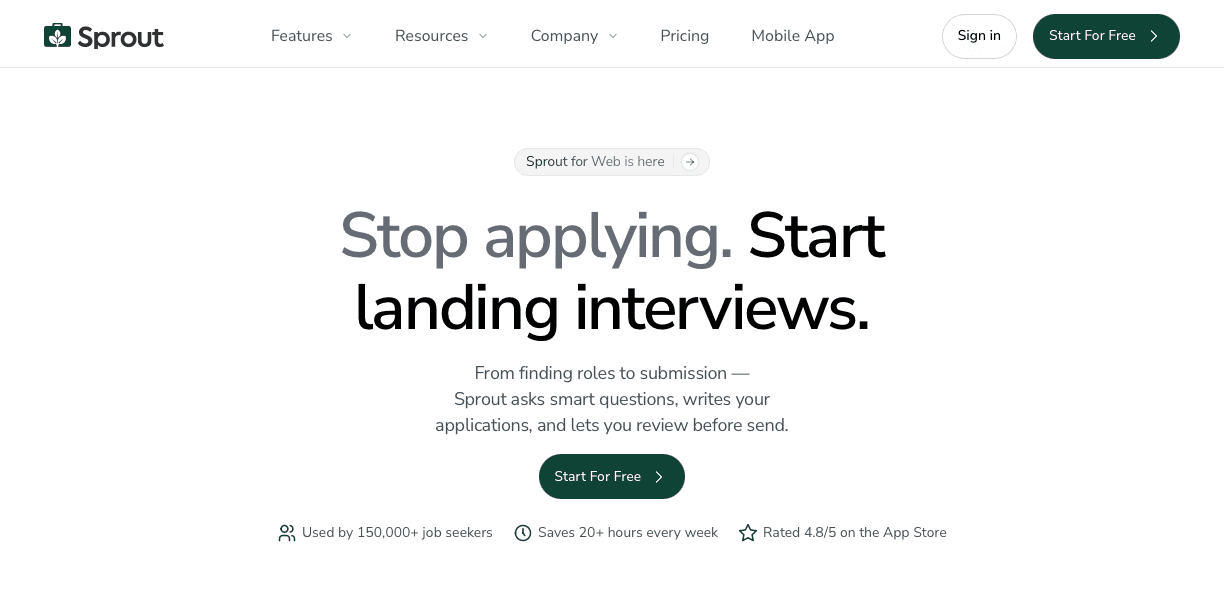
Sprout is built for the reality most job seekers face: too many job boards, too little time to tailor each application, and no clear way to track what's happening with roles you've applied to.
It pulls verified listings from across the web into a single feed, so you're not bouncing between tabs. From there, you can tailor your resume to each job description by cross-referencing the posting's keywords against your existing resume, flagging what's missing and where to add it. That keeps your application readable to ATS systems while staying honest to your experience.
What Makes Sprout Worth Considering
Sprout connects three things most job seekers manage separately: finding roles, tailoring applications, and tracking where everything stands. The tracker updates in real time, so you can see which roles are active, which have gone cold, and where you're waiting on a response.
Resume tailoring is tied to the specific job posting, not a generic keyword bank, so adjustments stay relevant to that role.
Listings are refreshed regularly, which can help reduce time spent on stale or closed roles.
The tracker gives you a view of your full pipeline at once, without piecing together status from browser tabs and email threads.
Sprout works best for job seekers applying at volume who want to keep quality intact. It's worth a look at usesprout.com.
JobCopilot
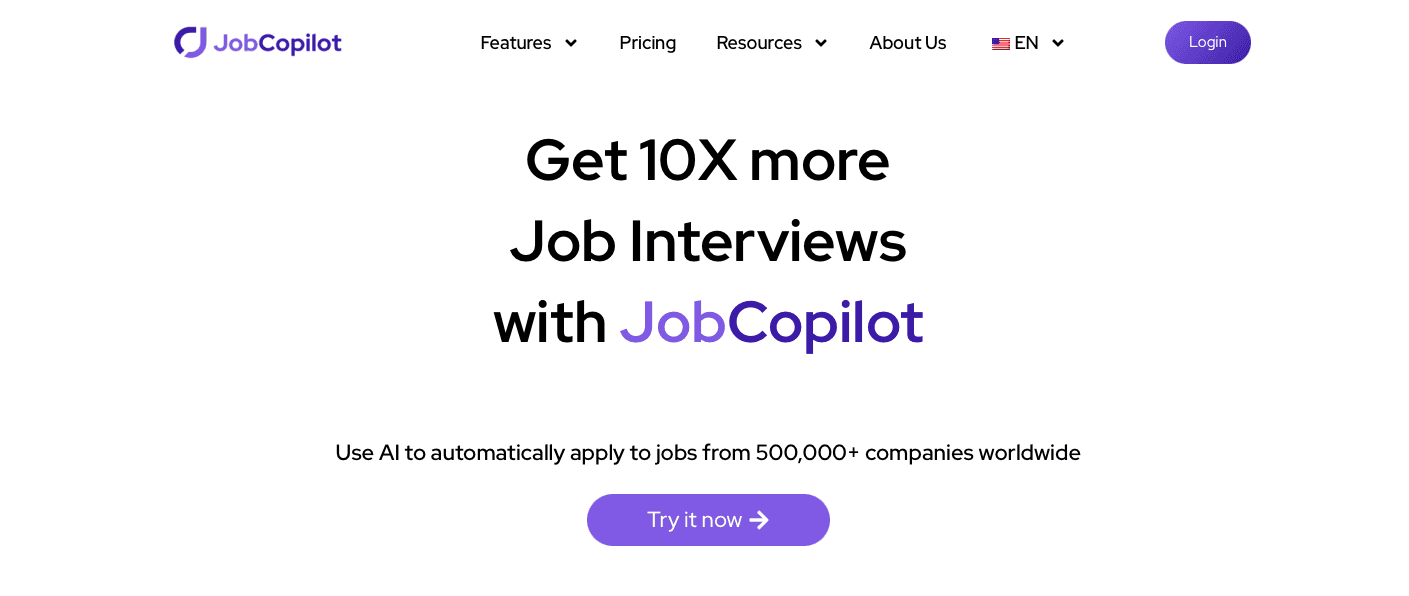
JobCopilot is an AI-powered job search tool that automates applications at scale. It connects to hundreds of job boards and applies to roles on your behalf based on a profile covering your experience, preferences, and target roles.
Instead of submitting applications one by one, JobCopilot runs in the background and keeps your pipeline moving. For job seekers who want broad market exposure quickly, that volume can be useful. ATS screening statistics show only a small percentage of applicants get interviews, which is why volume-focused tools have gained traction.
Where It Falls Short
Depending on setup and plan features, automated applications may not reflect every keyword or requirement of each specific posting. ATS systems score resumes against job descriptions, and applications that are automatically tailored to each posting often perform better than generic submissions.
Applying broadly means you can end up in processes for roles that are not a good fit, creating noise in your pipeline.
There is limited visibility after an application goes out. Tracking stages and follow-ups requires work outside the tool.
For job seekers who want speed and breadth, JobCopilot delivers. But if interview rate matters as much as application count, the lack of per-application tailoring is a real gap.
JobHire.AI
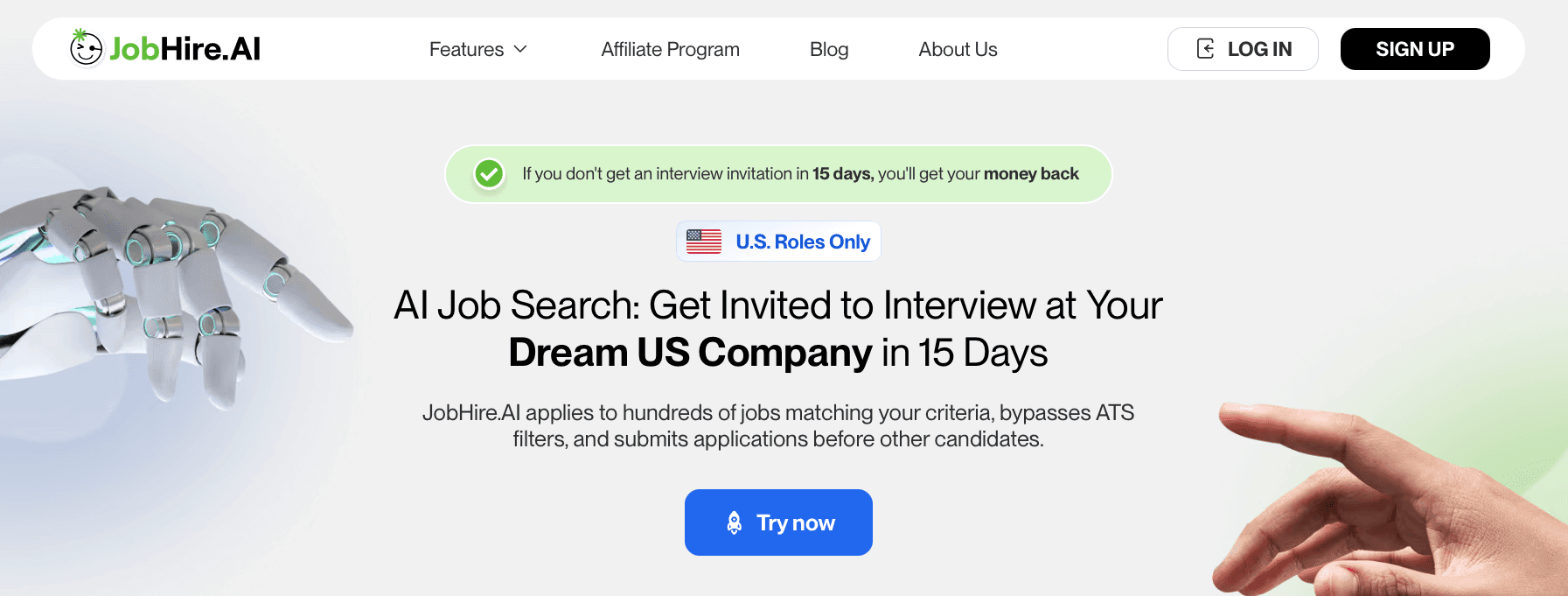
JobHire.AI is an automated job application tool focused on volume, scanning job boards and submitting applications on your behalf with minimal input after setup.
You fill out your profile once, set your preferences, and the tool gets to work. For job seekers tired of repetitive data entry when applying to dozens of roles, that saves real time.
That said, volume and fit are not the same thing. JobHire.AI applies broadly, so job-specific tailoring, weaving in keywords or adjusting how your experience reads for a particular role, takes a backseat to speed. Recruiters and ATS systems tend to respond better to applications that are tailored to the specific role, which is where dedicated tailoring tools have an advantage.
Where It Falls Short
The setup is relatively quick, but the tradeoff is that your application looks the same across every submission. The level of job-specific adjustment may vary, so users should review how closely each application aligns with the target job description.
Because it operates through automated form-filling, some job boards may flag or deprioritize submissions that come through non-standard submission paths.
It works best as a volume play for roles where the bar for initial screening is lower, but may underperform for competitive positions where tailored applications carry more weight.
If raw throughput is your goal and you are applying to a high volume of similar roles, JobHire.AI gets the job done. For roles where the details of your application actually matter, you may find the lack of customization is a real constraint.
Sonara
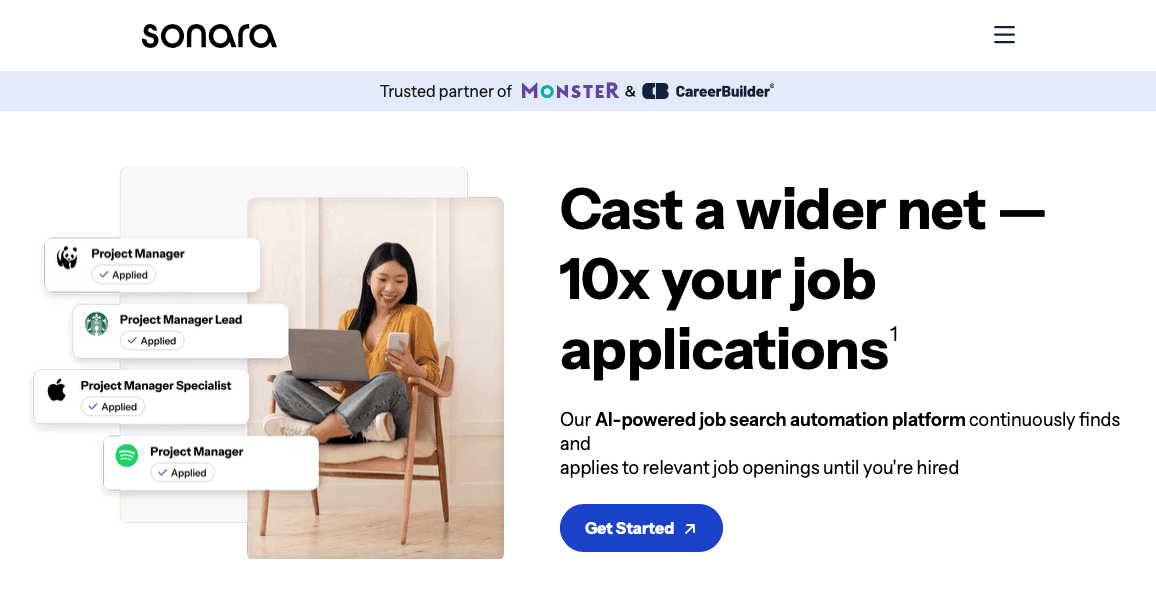
Sonara handles the actual submission process on your behalf. You describe what you're looking for, and Sonara applies to matching roles while you focus elsewhere.
Where It Falls Short
Automated mass applying tends to produce lower response rates than targeted outreach. Applications sent with a fixed profile may not reflect the specific language of each job description, which can affect ATS performance.
There is no per-application tailoring, so your resume goes out the same way regardless of the role's requirements.
Tracking stages and follow-ups requires work outside the tool.
Sonara suits job seekers who want to cast a wide net early in a search. If interview conversion matters more than volume, a tool with per-application tailoring will serve you better.
Simplify
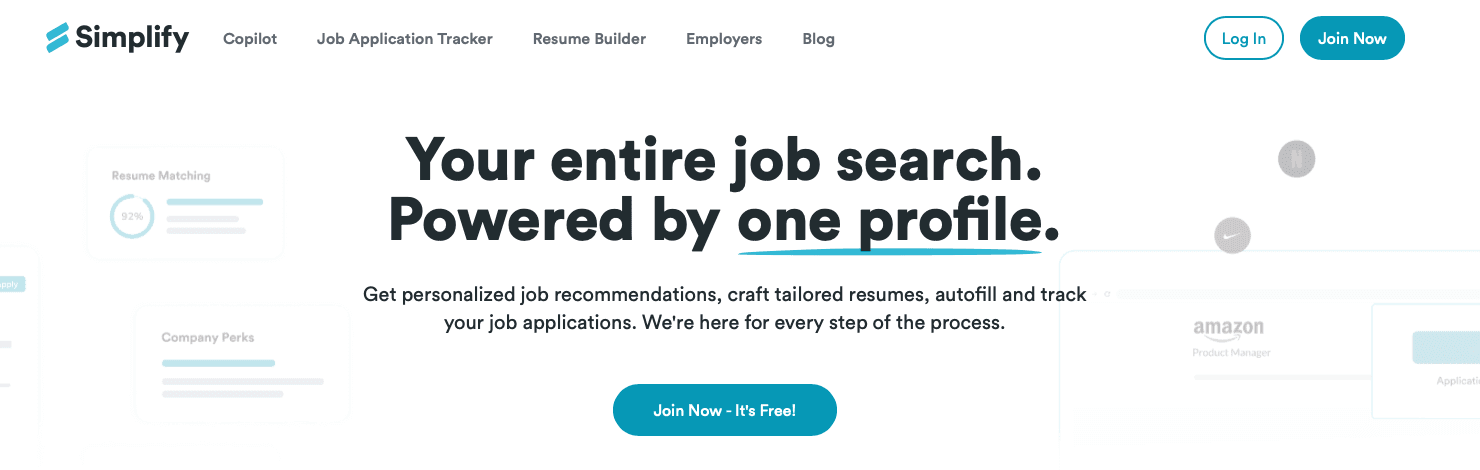
Simplify is a browser extension that auto-fills job applications and tracks submissions across job boards. You store your profile once, and Simplify pulls that information into application forms as you apply, cutting down on repetitive data entry.
Where It Falls Short
Applications go out using a fixed profile with no job-specific tailoring, so your resume and answers read the same regardless of the role's requirements.
There is no keyword gap analysis tied to individual postings, which means you may miss terms that matter to a specific employer's ATS filters.
Tracking is basic compared to tools built around pipeline management, so following up on applications still takes work outside the extension.
Simplify works well for cutting down form-filling time, but job seekers who want their resume tailored to each posting will need a separate tool to handle that.
LazyApply
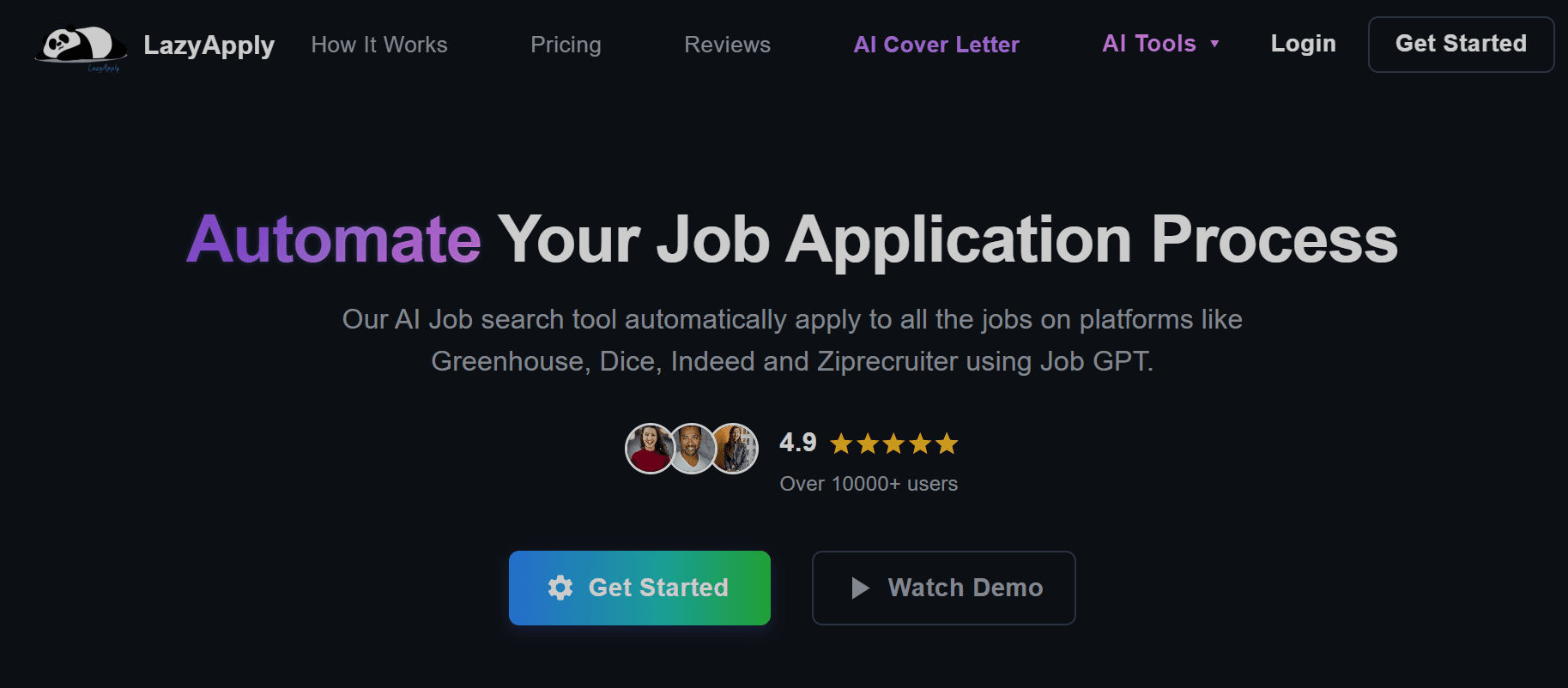
LazyApply uses a browser extension to auto-fill applications across job boards like LinkedIn, Indeed, and ZipRecruiter, letting job seekers submit hundreds of applications with minimal manual effort. For those casting a wide net early in a search, that throughput saves real time.
Where It Falls Short
Auto-fill pulls from a single stored profile, so every application goes out with the same resume and cover letter. There's no job-specific tailoring, so applications to roles with different requirements may not reflect your actual fit.
There's limited feedback on whether your resume will pass ATS parsing before it goes out. You're applying faster, but not necessarily smarter.
Some users report inconsistent auto-fill accuracy across job board formats, which can introduce errors that require manual review anyway.
LazyApply works for job seekers who want volume quickly and are already confident their base resume is in good shape.
Why Sprout Is the Best AI Job Application Tool
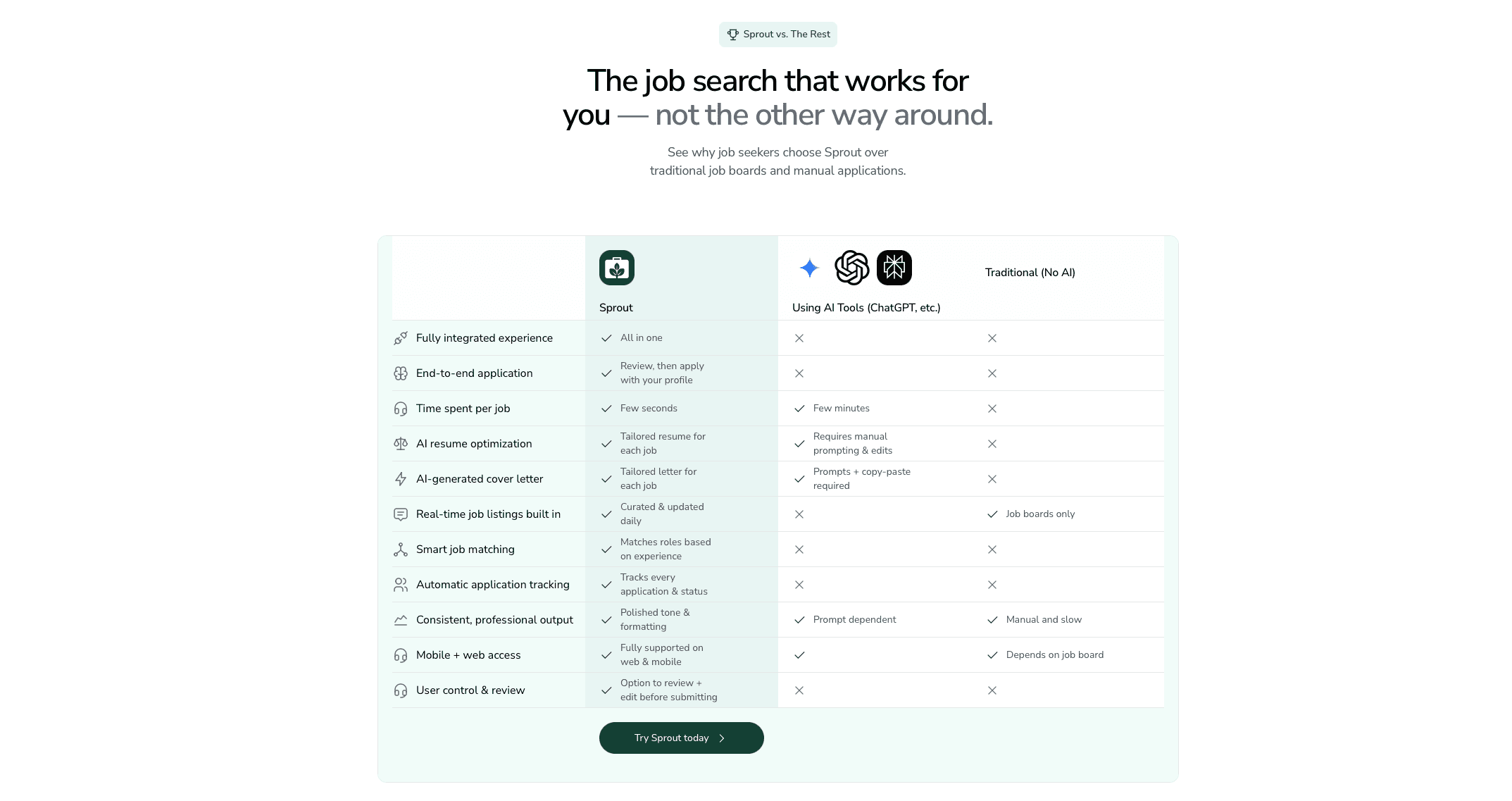
Sprout was built for the exact friction that makes job searching exhausting: spending hours tailoring applications one by one, losing track of where you applied, and never knowing if your resume even made it past the first filter.
The tool pulls verified job listings directly from employer sources, so you're not chasing outdated postings. When you find a role worth applying to, Sprout scans the job description for repeated keywords, cross-references them against your resume, and flags where your application is missing terms that matter to that specific role. You're not getting generic suggestions. You're getting a gap analysis tied to the actual posting.
Tracking is built into the same workflow. Every application you submit gets logged automatically, so you can see where things stand without maintaining a separate spreadsheet.
FAQs
Which AI job application tool is best for job seekers who want to apply quickly without losing personalization?
Sprout is built for that balance, tailoring each resume to job-specific keywords from the posting while keeping the process fast. Tools like LazyApply or JobHire.AI focus on speed, but users should check whether each application is tailored closely enough to the role.
How do I choose between a mass auto-apply tool and a tailored application tool?
If you're early in your search and want broad market exposure quickly, mass auto-apply tools like Sonara or JobCopilot can generate volume.If personalization matters more than raw application count, choose a tool that helps tailor each resume to the specific job description.
When should I consider switching from manual applications to an AI job application tool?
If you're spending hours per day on repetitive data entry, applying to dozens of similar roles, or losing track of where you've applied, an AI tool can cut that friction down. For highly targeted searches, tailoring remains important. Tools that automate role-specific tailoring can save significant time compared to doing it manually.
Final Thoughts on Finding the Right AI Job Application Tool
The best AI job application tools solve different bottlenecks. If it's volume, an auto-apply tool might help. If it's tailoring, something that scans job descriptions and flags missing keywords matters more. Sprout was built for job seekers who need both: speed that doesn't sacrifice fit, and tracking that keeps everything visible.